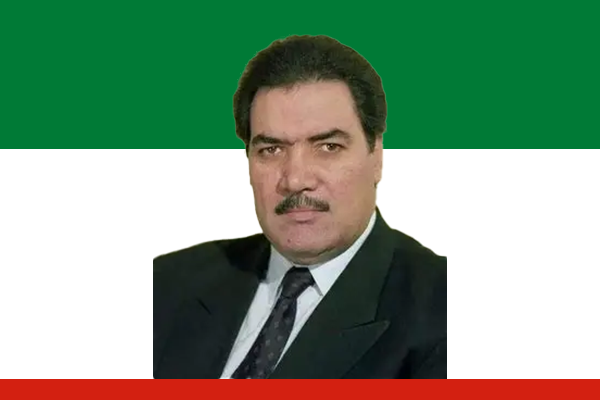
Mr. Mohammad Najibullah
In Office: 30 September 1987 – 16 April 1992
Political Party: People’s Democratic Party (Until 1990)
Homeland Party
Home state: Kabul
Lifespan: 1947–1996
Early Life and Education
Mohammad Najibullah was born on August 6, 1947, in Kabul, Afghanistan, into the Pashtun Ahmadzai tribe. He pursued medical studies at Kabul University and earned a degree in medicine. During his university years, he actively engaged in politics and joined the People’s Democratic Party of Afghanistan (PDPA), aligning himself with the Parcham faction led by Babrak Karmal.
Rise to Power
Najibullah rose politically by demonstrating loyalty to the party and strategically aligning with Soviet interests. After the Soviet invasion in 1979, the authorities appointed him as head of KHAD, the Afghan secret police, in 1980. Under his leadership, KHAD expanded its influence and became notorious for its surveillance operations and suppression of political dissent.
In 1986, the Soviets backed Najibullah to replace Babrak Karmal as President of Afghanistan. He launched a political initiative called “National Reconciliation,” aiming to end the civil war by involving moderate factions, tribal leaders, and former mujahideen in the government.
Presidency and Political Reforms
As President, Najibullah worked to shift Afghanistan away from strict Marxist ideology. In 1987, he introduced a new constitution and renamed the country the Republic of Afghanistan to reflect a more inclusive political direction. Despite these reforms, his government struggled with internal unrest and continued to rely on Soviet assistance.
Najibullah held on to power even after the Soviet military withdrew in 1989. He managed to do so by maintaining tribal alliances and leveraging military loyalty. However, the collapse of the Soviet Union in 1991 severed essential support, which quickly led to the downfall of his regime.
Fall from Power
In April 1992, mujahideen forces entered Kabul and forced Najibullah to resign. He sought asylum at the United Nations compound in Kabul, where he remained under effective house arrest for the next four years. Although several countries offered him asylum, officials repeatedly denied his safe passage.
While in confinement, Najibullah continued to write and share his thoughts on Afghanistan’s future. He warned the nation about the dangers of religious extremism and urged Afghans to unite without foreign interference.
Death and Legacy
On September 27, 1996, the Taliban captured Kabul, seized Najibullah and his brother from the UN compound, and brutally executed them. Their public hanging, despite their protected status, drew international condemnation and exposed the Taliban’s harsh tactics.
Najibullah’s legacy remains mixed. Some critics denounce him as a Soviet puppet and repressive ruler. Others regard him as a nationalist who tried to guide Afghanistan toward peace. Over time, many Afghans have come to see his warnings about extremism and foreign influence as prophetic. His life and tragic end symbolize the struggles of modern Afghanistan during one of its most volatile periods.