Mr. Ugyen Wangchuck
Coronation: 17 December 1907
Reign: 17 December 1907 – 26 August 1926
Home State: Bumthang
Lifespan: 11/06/1862 – 26/08/1926
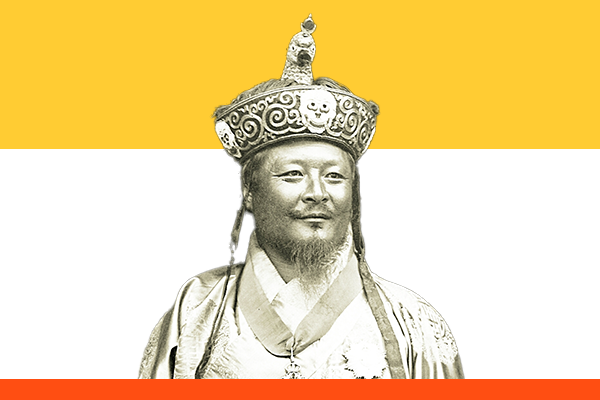
Early Life and Background
Mr. Ugyen Wangchuck was born in 1862 in Bumthang, Bhutan, as the son of Jigme Namgyal, the influential Penlop (Governor) of Trongsa. From a young age, he witnessed the complexities of Bhutanese politics and warfare, gaining hands-on experience in both diplomacy and military leadership. He inherited his father’s political ambition and leadership qualities, which later helped shape the foundation of modern Bhutan.
Rise to Power and Unification
In the late 19th century, internal strife divided Bhutan, with regional leaders competing for power. Ugyen Wangchuck rose to prominence by defeating rival factions, including powerful penlops and dzongpens (fortress lords). By 1885, he had established himself as the strongest leader in Bhutan and effectively took control as the de facto ruler. His efforts unified the country under a central authority, bringing long-awaited stability to the nation.
Diplomatic Engagement with British India
Recognizing the geopolitical landscape, Ugyen Wangchuck forged a strategic alliance with British India. In 1904, he actively assisted the British expedition to Tibet, led by Colonel Francis Younghusband. Acting as a mediator and facilitator during the mission, he gained British respect and recognition. The British government honored him with the title of Knight Commander of the Indian Empire (KCIE), and later elevated him to Knight Commander of the Star of India (KCSI).
Establishment of the Monarchy
In 1907, Bhutan took a historic step by establishing a hereditary monarchy. Religious leaders, regional governors, and the general population unanimously elected Ugyen Wangchuck as the first Druk Gyalpo (Dragon King) of Bhutan. His coronation in Punakha Dzong marked the beginning of the Wangchuck dynasty, which continues to lead the country today.
Reforms and Governance
As king, Ugyen Wangchuck introduced several administrative reforms to centralize power and improve governance. He upheld Bhutanese traditions while carefully initiating modernization. His reign prioritized peace, national unity, and the preservation of Bhutan’s independence. He maintained cordial ties with the British and limited foreign influence, ensuring Bhutan remained free from colonization.
Legacy
King Ugyen Wangchuck passed away in 1926, and his son Jigme Wangchuck succeeded him. Bhutanese people remember him as a unifying figure and visionary leader who laid the groundwork for the country’s modern political structure. By establishing the monarchy and practicing strategic diplomacy, he preserved Bhutan’s sovereignty and cultural identity. Today, the nation reveres him as a national hero and the architect of Bhutan’s political stability.