Mr. J. Singye Wangchuck
Coronation: 2 June 1974
Reign: 24 July 1972 – 9 December 2006
Home State: Thimphu Bhutan
Lifespan: 11/11/1955 – 1924
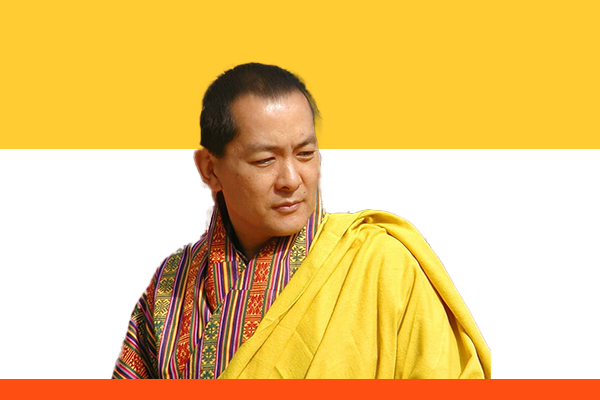
Early Life and Education
Jigme Singye Wangchuck was born on November 11, 1955, at Dechencholing Palace in Thimphu, Bhutan. He was the son of King Jigme Dorji Wangchuck, Bhutan’s third monarch, and Queen Ashi Kesang Choden. He received a blend of traditional and modern education in Bhutan, India, and the United Kingdom. His studies covered Buddhist philosophy, governance, and Western education, equipping him for the responsibilities of leadership.
Accession to the Throne
At just 16, Jigme Singye Wangchuck ascended the throne following the death of his father in 1972. Despite his young age, he led the country with maturity and vision. In June 1974, he held his formal coronation ceremony, which also marked Bhutan’s opening to the international community. From the beginning, he committed himself to continuing his father’s reforms while preserving Bhutan’s unique cultural identity.
Visionary Leadership and Gross National Happiness
King Jigme Singye Wangchuck introduced the development philosophy of Gross National Happiness (GNH), for which he is best known. This groundbreaking concept prioritized the well-being and happiness of citizens over mere economic growth. He established the four pillars of GNH—sustainable development, environmental conservation, cultural preservation, and good governance—as the foundation of Bhutan’s national policies. The concept earned widespread international acclaim.
Democratization and Decentralization
One of the king’s most remarkable contributions was transforming Bhutan into a constitutional monarchy. In 1998, he voluntarily transferred executive powers to a council of ministers. By 2001, he initiated the drafting of Bhutan’s first democratic constitution. These efforts culminated in the first parliamentary elections and the adoption of the constitution in 2008. He also reformed local governance by empowering communities through elected district and village councils.
Development and Modernization
Under his leadership, Bhutan experienced significant modernization. The government built schools, hospitals, and roads, with a strong focus on rural development. Health and education services expanded across the country, raising the standard of living. At the same time, the king safeguarded Bhutanese values and traditions, ensuring that modernization did not erode the nation’s cultural identity.
Environmental Conservation and National Security
A strong advocate of environmental protection, King Jigme Singye Wangchuck ensured that at least 60% of Bhutan’s land remained under forest cover. He committed the country to carbon neutrality long before it became a global standard. In 2003, he personally led a military operation to drive out Indian insurgent groups from southern Bhutan, protecting the nation’s sovereignty and displaying decisive leadership.
Abdication and Continuing Influence
In a rare act of humility and foresight, King Jigme Singye Wangchuck abdicated the throne in December 2006 in favor of his son, Jigme Khesar Namgyel Wangchuck. His decision ensured a smooth transition to a democratic constitutional monarchy, demonstrating his deep commitment to the national interest over personal power.
Legacy
King Jigme Singye Wangchuck remains widely revered as a wise and compassionate ruler. His philosophy of Gross National Happiness continues to shape Bhutan’s development. His leadership laid the foundation for a stable, democratic, and environmentally conscious Bhutan, and he continues to hold a cherished place in the country’s history.