Mr. Alben W. Barkley
In Office: January 20, 1949 – January 20, 1953
Political Party: Democratic
Home State: Kentucky
Lifespan: 1877–1956
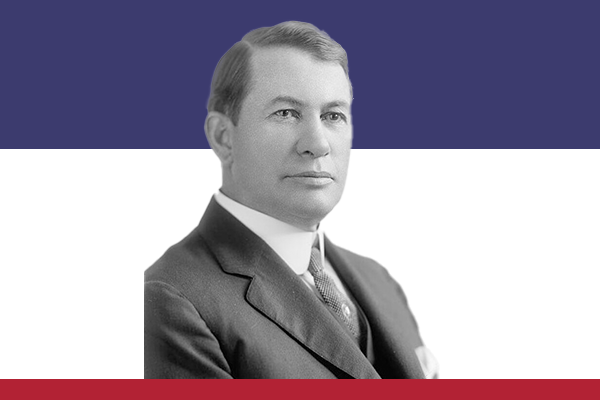
Alben William Barkley (1877–1956) was a prominent American politician who served as the 35th Vice President of the United States under President Harry S. Truman from 1949 to 1953. A skilled orator, respected legislator, and lifelong Democrat, Barkley had a political career that spanned over four decades, including lengthy service in both the House and Senate. He played a key role in shaping New Deal legislation and post-World War II policy and remains one of the most experienced and colorful figures ever to hold the office of Vice President.
Early Life and Education
Alben W. Barkley was born on November 24, 1877, in a log cabin near Lowes, Kentucky. He grew up in a poor farming family and worked from a young age to support his parents and siblings. Barkley attended Marvin College and Emory College (now Emory University), before enrolling at the University of Virginia School of Law.
After completing his legal studies, he returned to Kentucky and began practicing law in Paducah. His eloquence and natural political instincts soon brought him into public life. He married Dorothy Brower in 1903, and the couple had three children.
Political Career: House and Senate
Barkley entered politics as a local prosecutor, then ran for Congress as a Democrat and won a seat in the U.S. House of Representatives in 1912. He served seven terms (1913–1927), during which he supported President Woodrow Wilson’s progressive reforms and wartime leadership.
In 1926, Barkley won election to the U.S. Senate, defeating incumbent Republican Richard Ernst. He served in the Senate until 1949, becoming one of its most influential members. As a senator during the Great Depression, Barkley strongly supported President Franklin D. Roosevelt’s New Deal and emerged as one of its most passionate defenders. In 1937, the Democratic majority elected him Senate Majority Leader, a position he held for a decade.
As Majority Leader, Barkley helped steer landmark legislation through Congress, including Social Security expansions, labor protections, and wartime mobilization bills during World War II. He also played a key role in uniting the various factions of the Democratic Party, including Southern conservatives and Northern liberals.
Vice Presidency (1949–1953)
In 1948, President Harry Truman selected Barkley as his running mate for the upcoming presidential election. Barkley brought balance to the ticket—he was a Southern moderate, a seasoned legislator, and an energetic campaigner. During the campaign, he delivered fiery speeches and helped rally support from rural voters, union workers, and party loyalists. Despite widespread predictions of a Republican victory, the Truman-Barkley ticket won in a dramatic upset.
At age 70, Barkley was (at the time) the oldest person ever inaugurated as Vice President. Unlike some earlier vice presidents, Barkley maintained an active role in the administration. Truman respected his experience and judgment, often including him in Cabinet meetings and policy discussions.
As Vice President, Barkley presided over the Senate with humor and authority. He supported key Truman initiatives, including civil rights proposals, foreign aid under the Marshall Plan, and the creation of NATO. Barkley also became known for his dedication to bipartisanship and his ability to communicate complex ideas in plain language.
Later Life and Legacy
After Truman chose not to seek re-election in 1952, Barkley hoped to run for president. However, during the 1952 Democratic National Convention, party leaders considered him too old for the nomination, especially after he collapsed from exhaustion while campaigning. He withdrew his name and supported Adlai Stevenson instead. In 1954, at age 77, Barkley staged a political comeback by winning a seat in the Senate once again. He returned with vigor and remained a respected voice until his death.
On April 30, 1956, while delivering a speech at Washington and Lee University in Virginia, Barkley suffered a fatal heart attack. Just moments before collapsing, he had declared proudly, “I would rather be a servant in the House of the Lord than to sit in the seats of the mighty.” His death marked the end of a long and distinguished political life.
Legacy
Alben W. Barkley’s legacy is one of deep commitment to public service, legislative achievement, and personal integrity. Known as the “Veep,” a nickname he embraced, Barkley helped redefine the role of the Vice President as an active and engaged partner in governance. His wit, charm, and commanding presence made him a beloved figure across party lines. Today, Barkley is remembered as a dedicated statesman who rose from humble beginnings to the nation’s second-highest office, serving during some of the most critical periods in 20th-century American history.