Mr. Henry Wilson
In Office: March 4, 1873 – November 22, 1875
Political Party: Republican
Home State: Farmington
Lifespan: 1812–1875
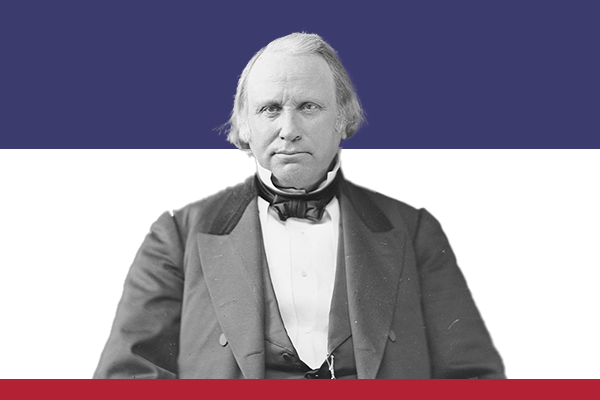
Early Life and Humble Beginnings
Henry Wilson was born Jeremiah Jones Colbath on February 16, 1812, in Farmington, New Hampshire. Born into deep poverty, he was indentured as a farm laborer at the age of 10 for a period of over a decade. Despite receiving little formal education, he developed a passion for reading and self-improvement. At age 21, he legally changed his name to Henry Wilson and set out to build a life through hard work and determination.
After learning shoemaking, Wilson moved to Natick, Massachusetts, where he became known as the “Natick Cobbler.” While working as a shoemaker, he continued to educate himself, particularly in history, politics, and economics. His humble beginnings and strong moral convictions would later shape his lifelong commitment to anti-slavery causes and social justice.
Entry into Politics and Anti-Slavery Advocacy
Wilson joined the Whig Party in the 1840s and quickly became active in Massachusetts politics. However, he broke with the Whigs over their failure to take a strong stand against slavery. In 1848, he helped found the Free Soil Party, a political group dedicated to stopping the expansion of slavery into new U.S. territories.
He served in the Massachusetts state legislature for several years and gained a reputation as a principled reformer and strong orator. Wilson also became an early member of the Republican Party when it was founded in the 1850s. His fierce opposition to slavery and his belief in equal rights earned him growing national attention.
U.S. Senate Career and Civil War Role
In 1855, Wilson was elected to the U.S. Senate, where he served until 1873. He became one of the leading anti-slavery voices in Congress. As chairman of the Senate Committee on Military Affairs during the Civil War, Wilson played a key role in mobilizing support for the Union cause and organizing the nation’s military policies.
He helped draft and support legislation that allowed Black men to enlist in the Union Army and pushed for the abolition of slavery throughout the country. Wilson also advocated for soldiers’ welfare, including fair pay and medical care. His close work with President Abraham Lincoln and his passionate speeches made him one of the most influential legislators of the war era.
Vice Presidency under Ulysses S. Grant (1873–1875)
In 1872, Wilson was elected as 18th Vice President of the United States under President Ulysses S. Grant, succeeding Schuyler Colfax. Seen as a symbol of integrity and moral leadership, Wilson was chosen to help restore public trust after scandals such as Crédit Mobilier had rocked the Grant administration.
During his vice presidency, Wilson continued to support civil rights and pushed for anti-corruption reforms. Unfortunately, his health began to decline soon after taking office, and he was unable to play a major role in policymaking. Still, he remained deeply committed to his principles and continued to write and speak on political issues.
Death and Legacy
Henry Wilson died of a stroke on November 22, 1875, while still serving as Vice President. His death marked the end of a remarkable journey from poverty to one of the highest offices in the nation.
Though not as widely remembered today, Wilson’s legacy remains significant. He was a lifelong champion of abolition, an advocate for working-class Americans, and a firm believer in the moral mission of government. His work in the Senate helped shape some of the most important civil rights legislation of the 19th century. Wilson also authored a multi-volume history of slavery and the rise of the Republican Party. From shoemaker to statesman, Henry Wilson’s life story is a powerful example of perseverance, conviction, and public service during a defining era in American history.