Mr. John C. Calhoun
In Office: March 4, 1825 – December 28, 1832
Political Party: Democratic-Republican
Home State: Abbeville
Lifespan: 1782–1850
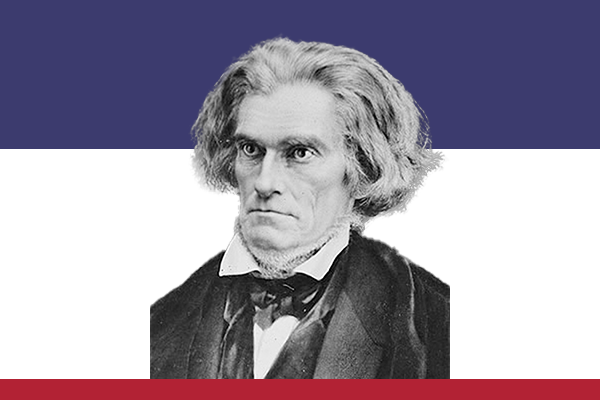
Early Life and Education
John Caldwell Calhoun was born on March 18, 1782, in Abbeville District, South Carolina. Raised in a prosperous agrarian family, he pursued higher education at Yale University, graduating in 1804. He then studied law at Tapping Reeve’s Litchfield Law School, gaining admission to the bar in 1807. Calhoun’s Southern heritage, classical education, and legal training laid the groundwork for his lifelong commitment to constitutional originalism, limited government, and Southern interests.
Early Political Career
Calhoun entered the U.S. House of Representatives in 1811 as a strong nationalist and supporter of the War of 1812. He quickly rose to prominence due to his sharp intellect and persuasive oratory. As a member of the War Hawks, Calhoun championed American military preparedness and expansionist ideals. In 1817, he was appointed Secretary of War under President James Monroe, where he reorganized the military and supported internal improvements, including roads and canals.
Vice Presidency (1825–1832)
John Caldwell Calhoun served as the 7th Vice President of the United States from: March 4, 1825 – December 28, 1832. He is one of the few people to serve under two different presidents: John Quincy Adams (1825–1829), Andrew Jackson (1829–1832). Calhoun resigned from the vice presidency in 1832—the first U.S. Vice President ever to do so. He stepped down to take a seat in the U.S. Senate, where he continued to advocate for states’ rights and nullification.
Champion of States’ Rights and Nullification
Calhoun’s most controversial contribution was his Nullification Theory, asserting that: The U.S. Constitution was a compact among sovereign states. States had the authority to nullify federal laws that exceeded constitutional limits. If not resolved, a state could lawfully secede from the Union. These ideas were central to the Nullification Crisis of 1832–1833, in which South Carolina, with Calhoun’s backing, attempted to nullify federal tariffs.
Defender of Slavery
Calhoun was a vehement defender of slavery, viewing it not as a necessary evil but a “positive good.” He argued that slavery was essential to the Southern way of life and the American economy.This position solidified his status as a divisive figure in American history and contributed to the ideological divide that led to the American Civil War.
Later Years and Death
Calhoun continued to serve in the Senate until his death, frequently clashing with abolitionists and Northern politicians. He opposed the Compromise of 1850, fearing it would give the North too much power. John C. Calhoun died on March 31, 1850, in Washington, D.C., leaving behind a deeply complex legacy.