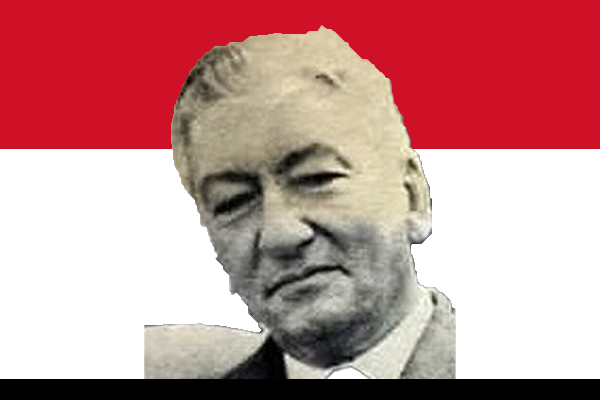
Early Life and Education
Aziz Sedky, born in 1920 in Cairo, grew up with a passion for science and engineering. He pursued his education at Cairo University, where he earned a degree in engineering. His brilliance in the field motivated him to continue his studies abroad. He traveled to Harvard University, where he obtained a Ph.D. in engineering, making him one of the first Egyptians to achieve such a distinction. His education prepared him to play a crucial role in shaping Egypt’s industrial future.
Rise in Government Service
The Egyptian government recognized Sedky’s exceptional talent and appointed him as a key advisor on industrial affairs. He did not limit himself to technical advice; instead, he actively created development strategies for Egypt’s economy. His dedication and forward-looking vision soon gained the attention of President Gamal Abdel Nasser, who valued his ideas for economic modernization. Sedky helped design Egypt’s industrialization policies, which aimed to reduce dependence on imports and strengthen national production.
Role as Minister of Industry
When Nasser appointed him as Minister of Industry in the 1950s, Sedky took bold steps to modernize the sector. He launched industrial projects, built factories, and introduced new technologies to strengthen production. He emphasized local manufacturing and encouraged Egyptians to rely on domestic goods rather than foreign imports. Sedky also developed new industrial zones, laying the foundation for Egypt’s industrial infrastructure.
He did not wait for external powers to dictate policies; instead, he built partnerships that benefited Egypt’s economy. His initiatives earned him the title “Father of Egyptian Industry,” a name that highlighted his pivotal role in the nation’s progress.
Premiership of Egypt
In 1972, President Anwar Sadat appointed Aziz Sedky as Prime Minister of Egypt. Sedky accepted the role during a critical period of transition, when Egypt faced both economic challenges and political shifts after Nasser’s era. As Prime Minister, he prioritized industrial development, economic self-reliance, and modernization.
He worked tirelessly to expand Egypt’s production capacity and ensure that the country could compete on a global level. He did not simply manage existing structures but actively pushed for reforms that could improve efficiency and output. His leadership displayed a combination of technical expertise and political strategy, making him a unique figure in Egyptian governance.
Contribution to Egyptian Industry
Sedky’s greatest legacy lies in his industrial achievements. He launched projects in steel, chemicals, textiles, and cement, which created jobs and strengthened Egypt’s economy. He invested in education and training programs to prepare young Egyptians for technical fields. He also promoted research and innovation, believing that science and industry must go hand in hand for sustainable growth.
His vision extended beyond factories and production lines. He believed that industrialization would give Egypt political independence, economic power, and international recognition. By building a strong industrial base, he positioned Egypt as a leader in the Arab world.
Later Years and Legacy
After his tenure as Prime Minister, Sedky continued to serve Egypt as an advisor and mentor to future leaders. He remained committed to his vision of industrial growth until his passing in 2008. Egyptians remember him not only as a politician but also as a nation-builder who transformed the country’s economy.
Aziz Sedky’s work continues to influence Egypt’s development strategies today. His policies created a foundation that modern leaders still build upon. Egyptians honor him as a pioneer who gave the country the tools to pursue progress and independence.
Conclusion
Prime Minister Aziz Sedky dedicated his life to Egypt’s industrial and economic transformation. His active role as Minister of Industry and later as Prime Minister showed his commitment to modernization. Known as the “Father of Egyptian Industry,” Sedky left behind a lasting legacy that continues to shape Egypt’s economy. His leadership proved that visionary policies and determined action could drive a nation toward self-reliance and prosperity.