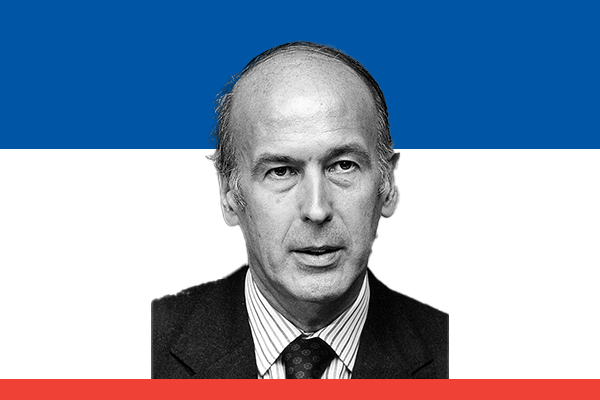
Early Life and Education
Valéry Giscard d’Estaing was born on February 2, 1926, in Koblenz, Germany, where his father worked as a financial officer for the French administration. His family returned to France, and Giscard grew up in Paris. He studied at Lycée Blaise-Pascal in Clermont-Ferrand and later at Lycée Louis-le-Grand in Paris. Giscard displayed strong academic abilities, which helped him gain admission to the prestigious École Polytechnique.
After serving in the French army during World War II, he enrolled at the École Nationale d’Administration (ENA), the elite training ground for French leaders. His education prepared him for a distinguished career in politics and public administration.
Entry into Politics
Giscard entered politics after joining the Ministry of Finance in 1952. He quickly rose through the ranks, earning recognition for his sharp economic mind. In 1956, he won a seat in the National Assembly as a deputy for Puy-de-Dôme. President Charles de Gaulle noticed his potential, and in 1959, he appointed Giscard as Secretary of State for Finance.
By 1962, President Georges Pompidou promoted him to Minister of Finance and Economic Affairs. In this role, Giscard introduced tax reforms, encouraged investment, and sought to balance growth with modernization. He gained popularity for his pragmatic, liberal economic policies.
Path to the Presidency
In the early 1970s, Giscard established himself as a centrist voice between Gaullists and Socialists. After Pompidou’s death in 1974, he announced his candidacy for president. Running on the slogan “Change without risk,” he appealed to young voters and moderates. He defeated Socialist François Mitterrand in a close election, becoming President of France at the age of 48.
Presidency (1974–1981)
Giscard d’Estaing’s presidency focused on modernizing French society and strengthening European cooperation. He lowered the voting age from 21 to 18, legalized abortion under Simone Veil’s health ministry, and promoted gender equality. He also encouraged technological innovation and supported the expansion of nuclear energy.
Internationally, he worked closely with German Chancellor Helmut Schmidt to drive European integration. Together, they laid the foundation for what later became the European Union. He also helped create the annual G7 summit, where leading industrial nations discussed global economic and political issues.
Despite these achievements, Giscard faced challenges during the global oil crisis of the 1970s. Rising inflation and unemployment weakened his popularity. By 1981, François Mitterrand defeated him in the presidential election, marking the end of his political dominance.
Later Career and Contributions
After leaving the presidency, Giscard remained active in politics. Giscard served as a member of the European Parliament and strongly advocated for deeper European unity. He later participated in drafting the proposed European Constitution, which reflected his lifelong commitment to European integration.
He also joined the Académie Française in 2003, recognizing his intellectual and cultural contributions. Beyond politics, Giscard published several books that explored his political philosophy and personal reflections.
Legacy
Valéry Giscard d’Estaing modernized French politics by blending liberal economic policies with social reform. His vision of a stronger, united Europe influenced future leaders and continues to shape the European Union. Although his presidency faced economic difficulties, historians credit him with opening French society to modernization and progressive values.
Death
Valéry Giscard d’Estaing passed away on December 2, 2020, at the age of 94, due to complications from COVID-19. France and Europe mourned the loss of a statesman who dedicated his life to reform, modernization, and European cooperation.
Conclusion
Valéry Giscard d’Estaing remains one of the most significant French presidents of the 20th century. He modernized French society, strengthened Europe’s future, and inspired future generations with his vision of progress and unity. His leadership continues to stand as a symbol of reformist politics and European integration.