Early Life and Education
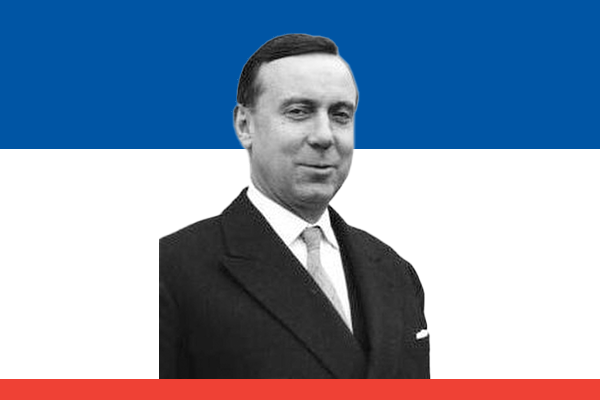
Michel Debré was born on January 15, 1912, in Paris, France. His family valued education and public service, which shaped his future ambitions. Debré pursued law and graduated from the École Nationale d’Administration, where he built a solid foundation in administration and governance. His early years reflected a commitment to justice and civic duty.
Career During World War II
When World War II broke out, Debré joined the French army. He served with determination and courage during the campaign of 1940. After France fell under German occupation, Debré supported the French Resistance and stood against authoritarian rule. His wartime experience strengthened his belief in democracy and sovereignty, values that later guided his political career.
Entry into Politics
After the war, Debré entered politics as a supporter of Charles de Gaulle. He admired de Gaulle’s leadership and vision for a strong France. In 1945, he became a member of the Provisional Consultative Assembly, where he advocated for constitutional reforms. His sharp intellect and loyalty to Gaullist ideals made him a rising figure in French politics.
Role in Drafting the Fifth Republic Constitution
One of Debré’s greatest contributions came in the late 1950s. As political instability plagued the Fourth Republic, Charles de Gaulle returned to power in 1958. Debré helped him draft a new Constitution that laid the foundation of the Fifth Republic. He designed it to strengthen executive power while maintaining democratic checks and balances. The Constitution reflected his belief in stability and strong leadership, and it continues to guide France today.
Appointment as the First Prime Minister
On January 8, 1959, Charles de Gaulle appointed Michel Debré as the first Prime Minister of the Fifth Republic. Debré assumed the role with dedication and loyalty to de Gaulle. He immediately worked to implement policies that reinforced the authority of the presidency while modernizing France’s institutions.
Domestic Policies as Prime Minister
Debré focused on national reforms, particularly in education and administration. He expanded educational opportunities by increasing access to schools and universities. He also pushed for civil service reforms to make government more efficient. His policies emphasized discipline, modernization, and social responsibility. While some critics viewed him as authoritarian, Debré believed strong governance was essential for progress.
Foreign Policy and the Algerian War
During his tenure, Debré also dealt with the Algerian War of Independence. He supported de Gaulle’s policies but initially resisted granting independence to Algeria. Over time, he recognized the necessity of a peaceful resolution. He worked to manage the crisis while balancing the pressures of both French settlers and Algerian nationalists.
Relationship with Charles de Gaulle
Debré remained deeply loyal to de Gaulle, often defending his policies with determination. However, tensions occasionally arose when they disagreed on strategies, particularly regarding Algeria. Despite differences, Debré respected de Gaulle’s leadership and supported his vision for France’s global role. His loyalty secured his place as one of the most trusted Gaullist leaders.
Later Career
In 1962, de Gaulle replaced Debré as Prime Minister with Georges Pompidou, but Debré continued his political career. He served as Minister of Economy and Finance, and later as Minister of Foreign Affairs. His influence extended across several governments, where he remained a defender of Gaullist principles.
Legacy
Michel Debré left a lasting legacy as the architect of the Fifth Republic’s Constitution and its first Prime Minister. He shaped French governance with his belief in strong executive power and efficient institutions. His reforms in education and public service influenced future generations. Even after leaving office, he continued to play an important role in shaping French politics.