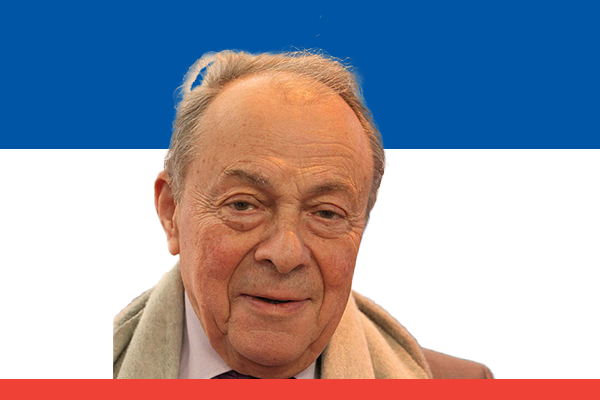
Mr. Michel Rocard
In Office: 10 May 1988 – 15 May 1991
Political party: Socialist Party
Home State: Courbevoie
Lifespan: 1930–2016
Country: France
Image credits available here.
Early Life and Education
Michel Rocard was born on August 23, 1930, in Courbevoie, France. He grew up in a family that valued education and intellectual debate. He pursued studies at Sciences Po and later attended the École Nationale d’Administration (ENA), where he prepared himself for a career in public service. His academic brilliance helped him build a strong foundation for politics. Rocard quickly developed a reputation as an independent thinker who embraced reformist ideals.
Entry into Politics
Rocard began his political journey in the 1960s by joining the Socialist Party. He championed progressive reforms and called for a pragmatic approach to governance. Unlike some of his contemporaries, he avoided rigid ideology and focused on realistic solutions to economic and social issues. In the early stages of his career, Rocard criticized colonial policies and strongly opposed the French government’s handling of the Algerian War. His bold stance attracted attention and earned him respect within reformist circles.
Rise in the Socialist Party
As the Socialist Party grew in influence, Rocard positioned himself as a prominent figure within its reformist wing. He became mayor of Conflans-Sainte-Honorine in 1977, demonstrating his ability to lead at the local level. His pragmatic style often contrasted with François Mitterrand’s more traditional approach to socialism. Despite political rivalries, Rocard gained recognition as a capable leader who could balance ideals with practical governance. His growing influence eventually made him a natural choice for higher office.
Appointment as Prime Minister
President François Mitterrand appointed Michel Rocard as Prime Minister in May 1988. Rocard faced the challenge of leading a minority government, but he used skillful negotiation to secure support from other political groups. He emphasized dialogue, compromise, and pragmatic decision-making. His ability to build coalitions allowed him to implement policies even without a commanding parliamentary majority. This approach distinguished him as a consensus-builder in a politically divided France.
Key Reforms and Achievements
Rocard introduced several landmark reforms during his tenure. He strengthened France’s welfare system by expanding the Revenu Minimum d’Insertion (RMI), a social benefit designed to reduce poverty and promote reintegration into the workforce. He improved labor relations by establishing a framework for social dialogue between workers, employers, and the government. Rocard also decentralized governance by transferring more power to local authorities, which enhanced efficiency and responsiveness.
On the international stage, he played a crucial role in advancing European integration. He supported the Maastricht process and worked to strengthen France’s role within the European Union. His leadership demonstrated a forward-looking vision that placed France at the center of European cooperation.
Challenges and Resignation
Despite his accomplishments, Rocard struggled with internal political tensions. His pragmatic methods sometimes clashed with ideological factions within the Socialist Party. Rivalries with President Mitterrand created further difficulties, limiting Rocard’s ability to fully implement his agenda. By 1991, mounting political pressures forced him to resign as Prime Minister. Nonetheless, he left office with a reputation for integrity, pragmatism, and reformist zeal.
Later Career and Legacy
After leaving the premiership, Rocard continued to influence French and European politics. He served as a Member of the European Parliament, where he advocated for deeper integration and environmental protection. He remained an intellectual force in French politics until his passing on July 2, 2016.
Michel Rocard’s legacy endures as that of a reformist who valued dialogue, compromise, and realism. He demonstrated that leadership requires both vision and adaptability. His contributions to social policy, decentralization, and European unity still shape French politics today.