Mr. Edward Stafford
In Office Term 1: 2 June 1856 – 12 July 1861
Term 2: 16 October 1865 – 28 June 1869
Term 3: 10 September 1872 – 11 October 1872
Political party: Independent
Home State: Edinburgh
Lifespan: 1819–1901
Country: New Zealand
Image credits available here.
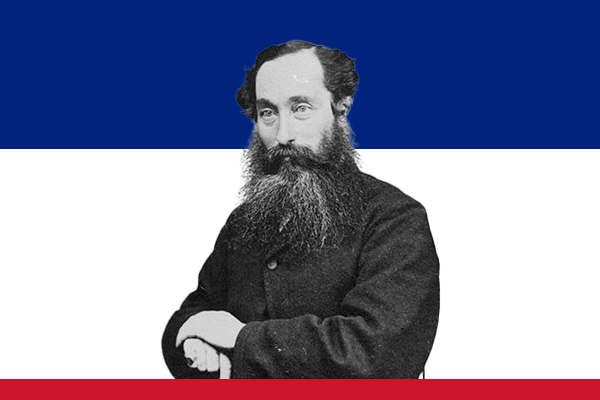
Early Life and Background
Edward William Stafford was born in 1819 in Edinburgh, Scotland. He pursued his education at Trinity College, Dublin, where he developed strong intellectual and political foundations. After completing his studies, he migrated to New Zealand in 1843. He quickly adapted to colonial life and invested his energy in public affairs. His Scottish background and education gave him a disciplined approach that would later define his leadership style.
Entry into New Zealand Politics
Stafford entered New Zealand politics during a period of rapid growth and administrative challenges. In 1849, settlers elected him to the Nelson Provincial Council. He earned respect as Superintendent of Nelson Province because he governed with efficiency and focus. By emphasizing order and progress, he made himself a strong figure in colonial politics. His ability to communicate clearly and act decisively attracted support from settlers who wanted stable governance.
First Term as Prime Minister
In 1856, Stafford became the third person to hold the office of Prime Minister of New Zealand. He took charge during the early years of responsible government, when leaders worked to establish political traditions. Stafford emphasized financial prudence and administrative efficiency. He reduced government spending and insisted on balanced budgets. He also promoted infrastructure development, focusing on roads and communication systems that connected settlements. His first ministry lasted until 1861, when political opposition forced him to resign.
Return to Leadership
In 1865, Stafford returned as Prime Minister. During this term, he confronted major challenges, including tensions between settlers and Māori communities. He supported policies that aimed to expand settler control, which often escalated conflict. Despite criticism, he remained committed to extending European settlement and reinforcing governmental authority. He also pushed for centralization, reducing the powers of provincial governments in favor of a stronger national administration.
Final Term and Later Political Role
Stafford served his third term as Prime Minister from 1869 to 1872. During this period, he continued to promote strong central authority. He also faced difficulties in managing relations with Māori, as resistance to land confiscations and colonial expansion persisted. Although his policies were controversial, he defended them as necessary for stability and progress. His ministry eventually collapsed under pressure from rivals, but Stafford remained an influential figure in Parliament until his retirement from politics.
Political Style and Contributions
Edward Stafford governed with a reputation for discipline, rationality, and firmness. He valued efficiency and fiscal responsibility, often cutting expenditures to maintain financial stability. His leadership helped shape the office of Prime Minister and laid the foundation for centralized governance. While critics accused him of being rigid and unsympathetic to Māori concerns, supporters praised his dedication to progress and order. His insistence on administrative control created long-lasting effects in New Zealand’s political structure.
Legacy
Edward Stafford died in 1901 in London, leaving behind a significant legacy in New Zealand history. He helped define the responsibilities of the Prime Minister during a formative period. His emphasis on financial discipline, centralization, and governance efficiency influenced later leaders. Although his handling of Māori relations remains controversial, his role in stabilizing and structuring the colonial government made him one of New Zealand’s most impactful early leaders.