Mr. Frederick Whitaker
In Office: 30 October 1863 – 24 November 1864
21 April 1882 – 25 September 1883
Political party: Independent
Home State: Bampton
Lifespan: 1812–1891
Country: New Zealand
Image credits available here.
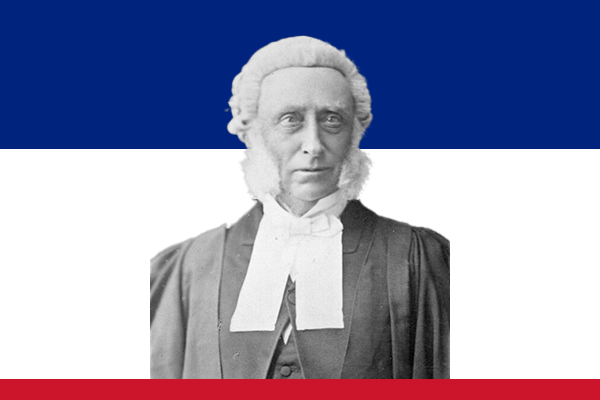
Early Life and Background
Frederick Whitaker was born on 23 April 1812 in Bampton, Oxfordshire, England. He grew up in England and pursued a legal career before moving to New Zealand in 1840. He quickly established himself as a lawyer in Auckland and became one of the leading legal minds of the colony. His legal expertise and dedication to public affairs allowed him to build a reputation as both a capable lawyer and an influential politician.
Entry into Politics
Whitaker entered politics soon after his arrival in New Zealand. He served in various legal and political roles, including as Attorney-General of New Ulster. His commitment to law and governance helped him rise in the political hierarchy. He played a crucial role in drafting legislation and guiding the young colony through its formative years. His strong legal background gave him an advantage in policy-making, especially in constitutional matters.
First Term as Prime Minister (1863–1864)
Frederick Whitaker became the fifth Premier of New Zealand in 1863 during a turbulent time in the nation’s history. He assumed office when conflict with the Māori intensified, leading to the New Zealand Wars. As Premier, he supported aggressive policies toward land acquisition, which deepened tensions with Māori communities. His government backed military campaigns and encouraged settlers to occupy Māori lands. Critics accused him of pursuing policies that favored European settlers over Māori rights. His first term lasted only until 1864, but it left a lasting impression on New Zealand’s political landscape.
Second Term as Prime Minister (1882–1883)
Whitaker returned to power nearly two decades later, becoming Premier again in 1882. During his second term, he focused more on financial and administrative reforms than on warfare. He worked to stabilize the economy, promote infrastructure development, and manage immigration. He believed that strong governance would secure New Zealand’s growth as a colony of the British Empire. Despite his efforts, his leadership style appeared cautious and conservative, and he resigned in 1883.
Contributions to New Zealand’s Governance
Throughout his career, Frederick Whitaker influenced both legal and political developments in New Zealand. He served as Attorney-General multiple times, contributing to the colony’s legal system. He shaped land policies, governance structures, and financial regulations. Although his land policies generated controversy, they highlighted his determination to strengthen settler influence. His long service showed his dedication to public life and the development of colonial New Zealand.
Legacy and Death
Frederick Whitaker died on 4 December 1891 in Auckland, New Zealand. His political career spanned over four decades, making him one of the most enduring figures in early New Zealand politics. Supporters remembered him as a skilled lawyer and determined leader, while critics emphasized his harsh stance on land issues and Māori rights. His legacy remains complex, reflecting both his contributions to governance and the controversies surrounding his policies.
Conclusion
Frederick Whitaker shaped New Zealand’s political and legal systems during the 19th century. As a lawyer, politician, and Prime Minister, he left behind a legacy of ambition, reform, and conflict. His leadership reflected the challenges of a young colony balancing European settlement and Māori relations. Despite the controversies, his influence on New Zealand’s governance remains undeniable.