Mr. Julius Vogel
In Office: 8 April 1873 – 6 July 1875
15 February 1876 – 1 September 1876
Political party: Independent
Home State: London
Lifespan: 1835–1899
Country: New Zealand
Image credits available here.
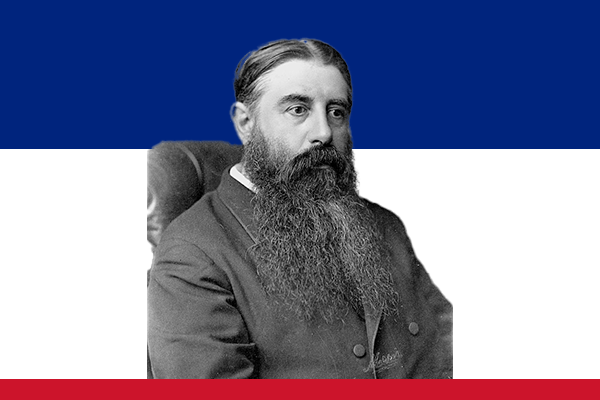
Early Life and Background
Julius Vogel was born on 24 February 1835 in London, England. He grew up in a Jewish family and developed an early interest in journalism and politics. After studying chemistry at the Royal School of Mines, he chose to pursue opportunities abroad. In 1861, he migrated to Australia during the gold rush but later moved to New Zealand, where he established himself as a journalist and politician.
Entry into Politics
Vogel entered New Zealand politics in the 1860s, first serving as a member of the Otago Provincial Council. His strong writing and speaking skills gave him influence among his peers. He won recognition for his bold ideas about economic development and infrastructure. By 1869, he had become colonial treasurer, where he presented his famous Great Public Works Policy.
The Great Public Works Policy
As colonial treasurer and later as prime minister, Vogel introduced a transformative program that aimed to modernize New Zealand. He pushed for large-scale borrowing from overseas to fund railways, roads, telegraphs, and immigration schemes. He argued that infrastructure would unlock New Zealand’s economic potential and bring long-term prosperity. This vision reshaped the country, as towns connected through railways and immigrants boosted the labor force.
Premiership and Achievements
Vogel first became Prime Minister of New Zealand in 1873. During his tenure, he vigorously promoted economic growth and modernization. He expanded public services and encouraged immigration, believing that population growth was vital for national development.
He also introduced policies that supported women’s rights and education. Notably, Vogel expressed support for female suffrage long before it became law in 1893. His government laid the groundwork for social progress in the decades ahead.
Vogel served multiple terms as premier, alternating between leadership roles and other ministerial positions. His energy, ambition, and determination made him one of the most dynamic figures in 19th-century New Zealand politics.
Later Career and Retirement
In the 1880s, Vogel continued to serve in politics, holding positions such as colonial treasurer and agent-general in London. However, financial struggles and declining health affected his later years. Despite these challenges, he remained respected for his contributions to the nation.
Vogel retired from public life and moved back to England. He continued writing and even authored a science fiction novel, Anno Domini 2000: A Woman’s Destiny, which imagined a future where women held political power—a reflection of his progressive views.
Legacy
Julius Vogel died on 12 March 1899 in East Molesey, Surrey, England. New Zealand remembered him as a visionary leader who reshaped the nation’s future. His Great Public Works Policy set the foundation for the modern economy, and his forward-thinking support for women’s rights placed him ahead of his time.
Today, historians regard him as one of New Zealand’s most influential prime ministers. His name remains linked to bold vision, progressive thought, and the modernization of a young nation.