Mr. John Hall
In Office: 8 October 1879 – 21 April 1882
Political party: Independent
Home State: Kingston upon Hull
Lifespan: 1824–1907
Country: New Zealand
Image credits available here.
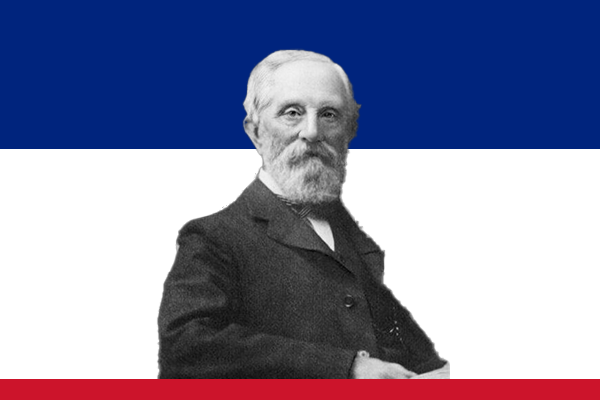
Early Life and Background
John Hall was born on 18 December 1824 in Hull, England. He grew up in a family that valued education and discipline. As a young man, he trained in business and administration, which gave him skills that would later prove useful in politics. In 1852, he migrated to New Zealand, where he quickly established himself as a capable farmer and community leader. His organizational skills and clear vision earned him respect among settlers, who encouraged him to enter politics.
Entry into Politics
Hall entered politics in 1855 when he became a member of the House of Representatives. He actively worked to improve governance and advocated for infrastructure development. In 1866, the government appointed him to the Legislative Council, where he played an important role in shaping policies. He showed a strong commitment to law and order, which earned him trust from both colleagues and citizens.
Prime Ministership (1879–1882)
John Hall became Prime Minister of New Zealand in 1879. He led the country during a period of political tension and economic challenges. His government focused on maintaining stability and reducing public expenditure. Hall introduced strict measures to bring discipline to public finances and ensure the nation’s economy remained strong.
He also promoted reforms in the electoral system, making voting more efficient and fair. His leadership style emphasized integrity and accountability, which helped restore public confidence in the government. Although he faced opposition from rival politicians, he firmly defended his policies and guided his cabinet with determination.
Contribution to Women’s Suffrage
One of Hall’s most remarkable achievements was his support for women’s suffrage. He strongly believed that women deserved the right to vote. In 1879, he introduced a parliamentary bill that aimed to give women this right, although it did not pass at the time. His early advocacy, however, laid the foundation for later reforms that eventually granted women full suffrage in 1893. By supporting this progressive cause, Hall earned recognition as one of the early champions of gender equality in New Zealand politics.
Legacy in Governance
Hall resigned as Prime Minister in 1882 due to poor health, but he remained active in public service. He continued to support reforms that improved the electoral system and strengthened democratic rights. His political career reflected his values of fairness, efficiency, and responsibility. Even after stepping down, he advised leaders and contributed to national debates.
His efforts in advancing women’s rights remain a key part of his legacy. Historians often highlight his vision for a more inclusive society and his determination to uphold principles of justice. By guiding the nation during a difficult period, Hall secured his place among the respected leaders of New Zealand.
Death and Remembrance
John Hall passed away on 25 June 1907. New Zealanders remembered him as a practical and principled leader who served with honesty. His advocacy for women’s suffrage and his role in stabilizing the government ensured his lasting influence in the country’s history. Monuments and historical records continue to honor his service, reminding citizens of his contributions to democracy and equality.
Conclusion
John Hall, the 12th Prime Minister of New Zealand, led the nation with discipline, foresight, and a strong sense of justice. He strengthened governance, improved financial management, and stood as an early advocate for women’s voting rights. His career demonstrated how determination and vision could shape the democratic future of New Zealand.