Mr. Jack Marshall
In Office: 7 February 1972 – 8 December 1972
Political party: National
Home State: Wellington
Lifespan: 1912–1988
Country: New Zealand
Image credits available here.
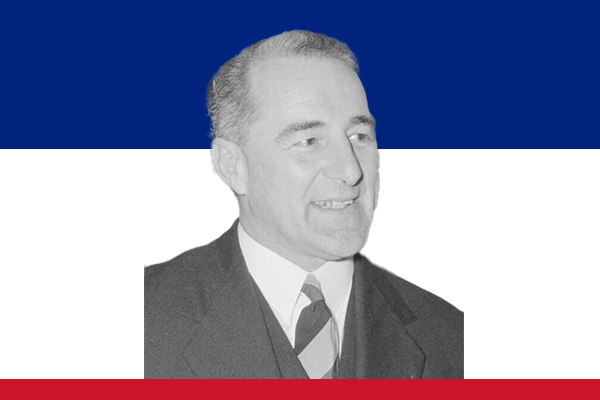
Prime Minister Jack Marshall: Leadership and Legacy
Jack Marshall, born John Ross Marshall on 5 February 1912 in Wellington, New Zealand, served as the 28th Prime Minister of New Zealand from February 1972 to December 1972. He played a significant role in New Zealand politics as a member of the National Party and left a lasting impact on both domestic policy and international relations.
Marshall grew up in a politically active family. He studied law at Victoria University College in Wellington, where he developed a strong interest in public service. Before entering politics, he practiced law and served in the military during World War II, where he gained leadership experience that would later influence his political career.
In 1946, Marshall entered Parliament as the representative for the Mount Victoria electorate. Over the years, he earned a reputation for his integrity, diligence, and commitment to public welfare. He held various ministerial positions, including Minister of Health, Minister of Justice, and Minister of Foreign Affairs, where he actively shaped policies and implemented reforms that improved public administration and social welfare programs.
Marshall became the Deputy Prime Minister in 1965 under Keith Holyoake’s leadership. In this role, he coordinated government activities, advised the Prime Minister, and represented New Zealand in international forums. His ability to mediate between party factions and manage complex governmental issues made him a respected figure within the National Party and the Parliament.
In February 1972, when Holyoake retired, Marshall assumed office as Prime Minister. During his tenure, he focused on economic stability, social development, and strengthening New Zealand’s international relations. He emphasized improving education, healthcare, and infrastructure, believing that a prosperous society required strong social foundations. Marshall also worked to maintain good diplomatic relations with neighboring countries and other members of the Commonwealth.
Although his time as Prime Minister lasted less than a year, Marshall actively addressed pressing national issues. He introduced measures to stabilize the economy, including policies to control inflation and encourage industrial growth. He promoted social programs that benefited education and healthcare, ensuring that the government responded to citizens’ needs efficiently and responsibly. His approach reflected his belief in practical governance and ethical leadership.
Marshall led the National Party into the 1972 general election. Despite his efforts, the party lost to the Labour Party under Norman Kirk. After the election, Marshall continued to serve as the Leader of the Opposition until 1974, when he retired from active politics. Even in retirement, he remained a respected advisor, offering insights into governance and public administration.
Jack Marshall passed away on 8 April 1988, leaving a legacy of integrity, dedication, and pragmatic leadership. Throughout his career, he actively contributed to New Zealand’s political landscape, ensuring that policies focused on public welfare, economic stability, and ethical governance. His service as Prime Minister, though brief, highlighted his commitment to responsible leadership and left a model of public service that continues to inspire New Zealand politicians.
Marshall’s career demonstrates the importance of principled leadership. By actively engaging in policy-making, addressing citizens’ concerns, and maintaining high ethical standards, he influenced the direction of New Zealand’s governance and strengthened the role of the Prime Minister in shaping national and international policies. His legacy endures as a testament to his dedication, skill, and vision for a progressive and just society.