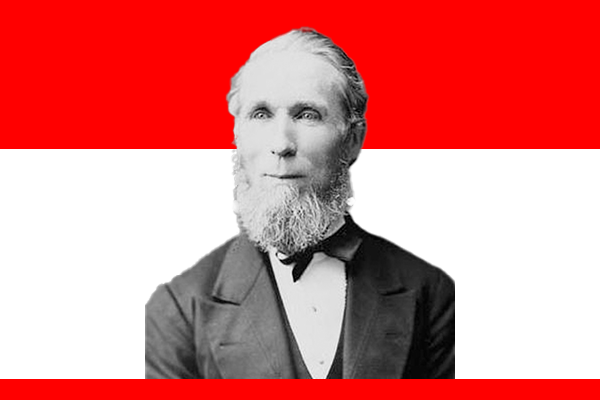
Early Life and Education
Alexander Mackenzie was born on January 28, 1822, in Logierait, Scotland. He grew up in a modest household, where he learned the value of hard work and discipline. He moved to Canada in 1842 at the age of 20, seeking better opportunities. Mackenzie worked as a stonemason and later became a respected building contractor. Despite his limited formal education, he developed strong reading and writing skills through self-study, which helped him gain recognition in politics.
Entry into Politics
Mackenzie entered politics in 1861 when he won a seat in the Legislative Assembly of the Province of Canada. His straightforward nature and dedication to public service quickly earned him respect. He supported Confederation in 1867, which led to the formation of the Dominion of Canada. After Confederation, Mackenzie joined the House of Commons as a member of the Liberal Party.
Becoming Prime Minister
Mackenzie became the second Prime Minister of Canada on November 7, 1873, after Sir John A. Macdonald resigned due to the Pacific Scandal. As the leader of the Liberal Party, Mackenzie promised honesty, transparency, and reforms in government administration.
Major Reforms and Achievements
- During his tenure as Prime Minister from 1873 to 1878, Alexander Mackenzie introduced several key reforms:
- Secret Ballot System: Mackenzie established the secret ballot system in Canadian elections, ensuring free and fair voting for all citizens.
- Supreme Court of Canada: He created the Supreme Court in 1875, providing Canada with its highest judicial authority.
- Royal Military College: He founded the Royal Military College in Kingston to train future military leaders.
- Expansion of the Railway: Mackenzie continued work on the transcontinental railway, though at a slower pace due to financial constraints.
Leadership Style
Mackenzie led with honesty and integrity. He valued simplicity and rejected luxurious lifestyles often associated with political power. His straightforward approach earned him admiration but also criticism from those who wanted faster economic growth and industrial development.
Challenges and Defeat
Despite his reforms, Mackenzie faced economic difficulties caused by a global recession in the 1870s. The slow progress on the railway and economic hardship led to public dissatisfaction. In the 1878 election, Sir John A. Macdonald returned to power with the Conservative Party, defeating Mackenzie’s Liberals.
Later Life and Legacy
After leaving office, Mackenzie continued to serve in Parliament until his death on April 17, 1892. Historians remember him for his commitment to democracy, honesty in politics, and administrative reforms that strengthened Canada’s institutions.
Conclusion
Alexander Mackenzie may not have been a flashy leader, but his reforms laid the foundation for Canada’s democratic traditions. His integrity and dedication to public service set a high standard for future leaders.