Mr. John Abbott
In Office: June 16, 1891 – November 24, 1892
Political party: Liberal-Conservative
Home State: Saint-André-d’Argenteuil
Lifespan: 1821–1893
Country: Canada
Image credits available here.
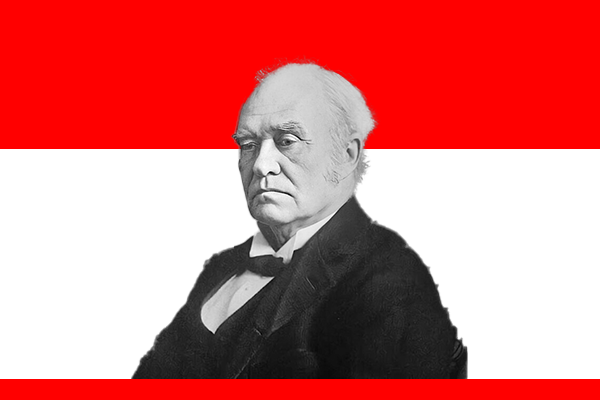
Early Life and Education
John Joseph Caldwell Abbott was born on March 12, 1821, in St. Andrews, Lower Canada (now Quebec). He grew up in a modest household, where education and discipline were highly valued. Abbott studied law at McGill University and quickly established himself as a leading lawyer in Montreal. His dedication to legal excellence laid the foundation for his political career.
Entry into Politics
Abbott entered politics in the 1850s, representing Argenteuil in the Legislative Assembly of the Province of Canada. He supported Confederation and worked toward uniting the provinces under one federal government. After the formation of the Dominion of Canada in 1867, Abbott became a member of the House of Commons.
Legal and Business Achievements
Besides politics, Abbott enjoyed a successful legal career. He became a professor of law at McGill University and later served as its dean. He also contributed to the Canadian Pacific Railway’s development, helping expand the nation’s infrastructure and economy. His business acumen made him one of Canada’s most respected figures.
Becoming Prime Minister
In 1891, Prime Minister Sir John A. Macdonald died, leaving a leadership vacuum in the Conservative Party. As a senior cabinet minister and respected politician, Abbott was chosen to succeed him. He became Canada’s third Prime Minister on June 16, 1891.
Leadership Style and Policies
Abbott preferred to work behind the scenes rather than seek the limelight. He focused on administrative efficiency, party unity, and economic growth. His leadership helped stabilize the Conservative Party during a turbulent political period. Abbott believed in practical solutions rather than grand political ideals, which made him a respected, if reluctant, leader.
Challenges During His Tenure
Abbott faced several challenges, including internal party conflicts and health issues. Despite these difficulties, he managed to maintain political stability and support economic development. However, his declining health forced him to resign as Prime Minister in November 1892, after just 17 months in office.
Later Life and Legacy
After resigning, Abbott returned to Montreal and continued his involvement in legal and business affairs. He passed away on October 30, 1893. Though his tenure as Prime Minister was brief, Abbott is remembered for his administrative skills, integrity, and contributions to Canada’s early political framework.