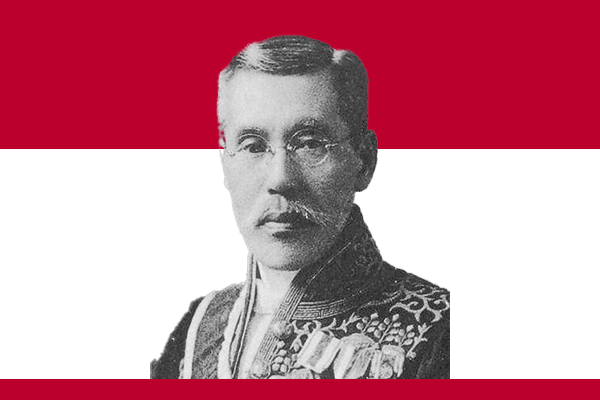
Early Life and Education
Kiichirō Hiranuma was born on September 28, 1867, in Tsuyama, Okayama Prefecture, Japan. He grew up in a samurai family that valued education and discipline. Hiranuma studied law at Tokyo Imperial University, where he developed a deep interest in justice and governance. After graduation, he chose to work in Japan’s judicial system, aiming to modernize its legal framework.
Early Career and Rise in Politics
Hiranuma began his career as a prosecutor and quickly gained recognition for his dedication and strict sense of ethics. He handled major political and financial scandals, earning a reputation as a fearless reformer. His work impressed government leaders, and he rose through the ranks to become Attorney General of Japan.
During his tenure, he advocated for judicial independence and transparency. He also fought against corruption, ensuring that justice prevailed even in politically sensitive cases. His bold actions made him a national figure and paved the way for his entry into politics.
Entry into the Privy Council
In 1924, the government appointed Hiranuma to the Privy Council, where he advised the Emperor on legal and political matters. He used this position to influence policies on national security and constitutional matters. Hiranuma believed in preserving Japan’s traditions while embracing modernization.
As President of the Privy Council, he defended the Emperor’s sovereignty and opposed political parties that, in his view, weakened national unity. His conservative ideology attracted support from right-wing groups, shaping his later political career.
Tenure as Prime Minister
In January 1939, the Emperor appointed Kiichirō Hiranuma as Prime Minister of Japan. As leader, Hiranuma faced mounting challenges. Japan was expanding its influence in Asia, and tensions with Western powers were rising.
Hiranuma supported Japan’s imperial ambitions but sought to avoid direct confrontation with Western nations. He attempted to balance military expansion with diplomatic efforts. However, the signing of the German-Soviet Non-Aggression Pact in August 1939 shocked Japan’s leadership. Hiranuma viewed the pact as a betrayal since Japan had aligned with Germany under the Anti-Comintern Pact.
Believing Japan needed a new approach to foreign policy, Hiranuma resigned in August 1939, ending his short but eventful term as Prime Minister.
Later Life and Post-War Role
After leaving office, Hiranuma remained active in politics as a member of the Privy Council. However, after World War II, Allied authorities arrested him for alleged war crimes due to his role in Japan’s wartime government.
The Tokyo War Crimes Tribunal tried him, but his declining health prevented a full trial. In 1952, the authorities released him, and he lived quietly until his death on August 22, 1952.
Legacy
Historians view Kiichirō Hiranuma as a complex leader. He upheld conservative values, promoted judicial reforms, and sought to protect Japan’s sovereignty. However, his brief tenure as Prime Minister limited his political impact.
Despite this, his contributions to Japan’s legal and political systems remain significant. He symbolized the transitional period when Japan struggled between modernization, tradition, diplomacy, and militarism.