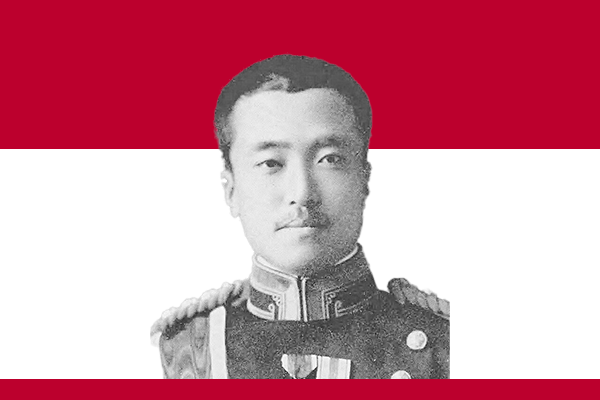
Early Life and Military Career
Higashikuni was the ninth son of Prince Kuni Asahiko. Educated at the Imperial Japanese Army Academy and the Army War College, he furthered his studies in France, attending institutions like Saint-Cyr and the École Polytechnique. Upon returning to Japan, he was promoted to general in 1930 and held various military positions, including commander of the General Defense Command from 1941 to 1944.
Appointment as Prime Minister
Following Japan’s surrender in August 1945, Emperor Hirohito appointed Higashikuni as Prime Minister. The appointment aimed to leverage his imperial lineage to stabilize the nation during its transition. Higashikuni’s cabinet focused on demobilizing the military and ensuring the continuity of the imperial institution. He presided over the formal signing of Japan’s surrender on September 2, 1945.
Encyclopedia Britannica
Resignation and Later Life
In October 1945, Higashikuni resigned after a dispute with the Allied occupation authorities over the repeal of the 1925 Peace Preservation Law, which the Allies viewed as repressive. Following the abolition of the princely houses in 1947, he became a commoner. In his later years, Higashikuni engaged in various activities, including founding a Buddhist sect and serving as honorary chairman of the International Martial Arts Federation.
Legacy
Prince Naruhiko Higashikuni’s brief tenure as Prime Minister remains a significant chapter in Japan‘s post-war history. His leadership during a pivotal time exemplifies the complexities of transitioning from a wartime regime to a peaceful nation. He passed away on January 20, 1990, at the age of 102, leaving behind a legacy intertwined with Japan’s journey through the 20th century.
Conclusion
Prince Naruhiko Higashikuni’s role as Japan’s first post-war Prime Minister underscores the unique intersection of imperial heritage and political leadership. His efforts during a tumultuous period highlight the challenges faced by leaders in times of national crisis.