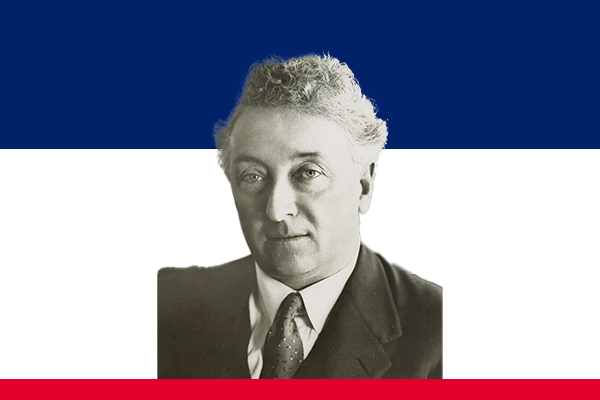
Early Life and Background
Joseph Aloysius Lyons was born on September 15, 1879, in Stanley, Tasmania. He grew up in a poor family, but he worked hard to support his education. Lyons trained as a teacher and taught in small Tasmanian schools. His early experiences made him understand the struggles of ordinary Australians, and this empathy later guided his political career.
Entry into Politics
Lyons entered politics in 1909 when he won a seat in the Tasmanian House of Assembly as a Labor Party member. He quickly built a reputation as a capable and honest leader. In 1923, he became the Premier of Tasmania. As Premier, he introduced reforms in education and infrastructure, which improved living standards in the state. His practical style of leadership earned him respect across party lines.
Federal Career and Shift in Politics
In 1929, Lyons moved into federal politics. He became Postmaster-General and later Treasurer in James Scullin’s Labor government. When the Great Depression struck, he pushed for balanced budgets and financial stability. However, his economic policies clashed with other Labor leaders who supported heavy government spending.
Lyons left the Labor Party in 1931 due to these disagreements. He then helped form the United Australia Party (UAP), which brought together conservatives and moderates. His calm manner, popularity with voters, and reputation for honesty made him the natural choice to lead the new party.
Becoming Prime Minister
In 1932, the UAP won the federal election, and Lyons became Australia’s 10th Prime Minister. He gained the trust of Australians by promising stability during hard times. He reduced government spending, restored business confidence, and guided the nation through the worst years of the Depression. Ordinary Australians called him “Honest Joe” because of his straightforward style and down-to-earth nature.
Leadership Style
Lyons led by consensus and avoided extreme positions. He believed in cooperation between business, government, and workers. His wife, Dame Enid Lyons, also played an important public role, supporting his campaigns and later becoming the first woman elected to the Australian House of Representatives. Together, they symbolized a modern, family-oriented style of leadership that appealed to the public.
Achievements and Challenges
During his time as Prime Minister, Lyons stabilized the economy and helped Australia recover from the Depression. He encouraged industrial growth, strengthened ties with Britain, and increased defense spending as global tensions rose in the 1930s. However, critics argued that his cautious approach sometimes slowed reforms. Despite this, Australians valued his ability to unite different political groups and bring calm leadership during uncertain times.
Later Years and Death
Lyons continued to serve as Prime Minister throughout the 1930s. By the late 1930s, his health began to decline due to the pressures of leadership. On April 7, 1939, he died in office, becoming the first Australian Prime Minister to do so. His sudden death shocked the nation, as he remained a popular figure until the end.
Legacy
Joseph Lyons left a lasting impact on Australian politics. He proved that a leader could rise from humble beginnings and connect with the people. His success in forming the United Australia Party reshaped the political landscape and paved the way for future conservative governments. Australians remember him as a steady and approachable leader who guided the nation through economic hardship and global uncertainty.