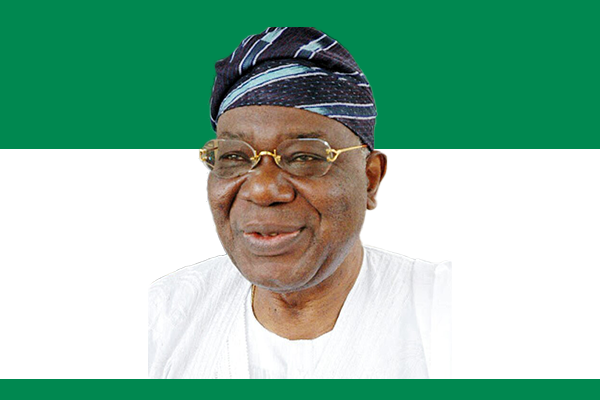
Early Life and Education
Ernest Adegunle Oladeinde Shonekan was born on May 9, 1936, in Lagos, Nigeria. He grew up in a middle-class Yoruba family and showed academic excellence from an early age. He attended the prestigious CMS Grammar School and later pursued a law degree at the University of London. His education shaped his discipline, leadership, and administrative vision. After completing his studies, he returned to Nigeria and began his career in business, laying the foundation for his later political influence.
Business Career and Rise to Prominence
Shonekan started his professional journey with the United Africa Company (UAC) of Nigeria, one of the largest conglomerates in West Africa. His dedication, intelligence, and managerial skills earned him promotions until he became the company’s Chairman and Chief Executive Officer in 1980. Under his leadership, UAC expanded its operations, diversified its investments, and became a symbol of Nigerian corporate strength.
Through his business success, Shonekan built relationships with political leaders and global figures, which eventually led him to national prominence. His calm demeanor and commitment to national unity made him a respected voice in Nigeria’s socio-economic development.
Entry into Politics and Transitional Government
In 1993, Nigeria faced a deep political crisis following the annulment of the June 12 presidential election by the military regime of General Ibrahim Babangida. The nation was in turmoil, and the call for civilian leadership grew louder. To stabilize the country, Babangida established an Interim National Government (ING) and appointed Ernest Shonekan as its head on August 26, 1993.
As the transitional president, Shonekan took charge during one of Nigeria’s most challenging political eras. He aimed to restore democratic order, rebuild the economy, and gain public trust. He immediately initiated talks with various political and civic groups to promote peace and democratic transition.
Leadership and Challenges
Shonekan’s administration worked to address Nigeria’s worsening economic situation. He advocated for reforms that would reduce the country’s dependency on oil and strengthen industrial and agricultural production. He also sought to attract foreign investment and stabilize the national currency.
However, his government faced strong opposition from pro-democracy activists who demanded the reinstatement of the election results. Additionally, the military retained significant influence over the government, limiting Shonekan’s authority. These factors weakened his position and made his leadership difficult to sustain.
Despite these obstacles, Shonekan remained dedicated to promoting democratic governance and economic recovery. His moderate and peaceful approach reflected his belief in dialogue and constitutional order rather than confrontation.
End of Tenure and Legacy
On November 17, 1993, Shonekan’s interim government came to an abrupt end when General Sani Abacha seized power in a military coup. Although his time in office was short, Shonekan’s leadership symbolized a peaceful attempt to transition Nigeria from military to civilian rule.
After leaving office, Shonekan returned to private life and continued to contribute to national development through the Nigerian Economic Summit Group (NESG), which he founded to encourage dialogue between the public and private sectors.
Death and Remembrance
Ernest Shonekan passed away on January 11, 2022, at the age of 85. Nigerians remembered him as a patriotic statesman who valued integrity, peace, and service. His brief presidency demonstrated his willingness to accept national responsibility during a time of uncertainty.
Conclusion
Ernest Shonekan’s leadership may have been brief, but his role in Nigeria’s political history remains significant. He acted as a bridge between military rule and democracy, guiding the country through a crucial transitional phase. His commitment to economic reform, national unity, and peaceful governance continues to inspire leaders who seek progress through dialogue and integrity.