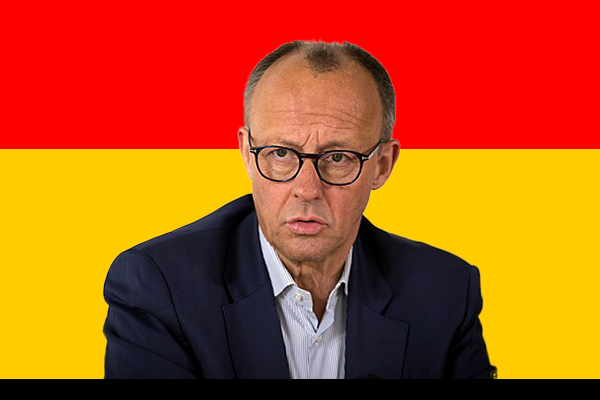
Early Life and Education
Merz completed his Abitur (university entrance qualification) in 1975 at the Friedrich-Spee Gymnasium in Rüthen. He then served in the military before studying law and political science in Bonn and Marburg. After passing his first state examination in law in 1982, he completed his preparatory service at Saarbrücken Regional Court from 1982 to 1985, followed by his second state examination in law. He worked as a judge at Saarbrücken District Court from 1985 to 1986 and subsequently became a lawyer.
Political Career Entry into Politics
Merz joined the CDU in 1972 and quickly became active in the Junge Union, the party’s youth wing. In 1989, he was elected to the European Parliament, marking the beginning of his political career. He served in the Bundestag from 1994 to 2009, where he established himself as a leading financial policy expert within the CDU. Merz chaired the CDU/CSU parliamentary group in the Bundestag from 2000 to 2002.
Return to Politics
After a period away from active politics, Merz returned in 2021 and was elected leader of the CDU in January 2022. Under his leadership, the CDU formed a coalition with the Social Democratic Party (SPD) following the February 2025 federal election. Despite an initial setback in the first round of voting, Merz was elected Chancellor by the Bundestag in May 2025.
Reuters
Leadership as Chancellor Domestic Policies
As Chancellor, Merz has focused on economic reforms, including corporate tax cuts and reduced energy prices, aiming to stimulate growth. His government has also committed to increasing defense spending and supporting Ukraine.
Reuters
Foreign Policy
Merz has emphasized strengthening European unity and positioning Germany as a key figure in the global order. In June 2025, he met with U.S. President Donald Trump, marking a significant step in transatlantic relations.
Brookings
Challenges and Public Perception
Despite his leadership, Merz faces challenges in public approval. Recent polls indicate that only 26% of respondents are satisfied with his policies, while 71% express dissatisfaction. This marks a historic low in his popularity.
Personal Life
Merz is married to Charlotte, a judge, and they have three grown children. His personal life remains relatively private, with a focus on his professional endeavors.
Conclusion
Friedrich Merz’s journey from a legal professional to Germany‘s Chancellor reflects his dedication to public service and conservative values. While facing significant challenges, his leadership continues to shape Germany’s political landscape.