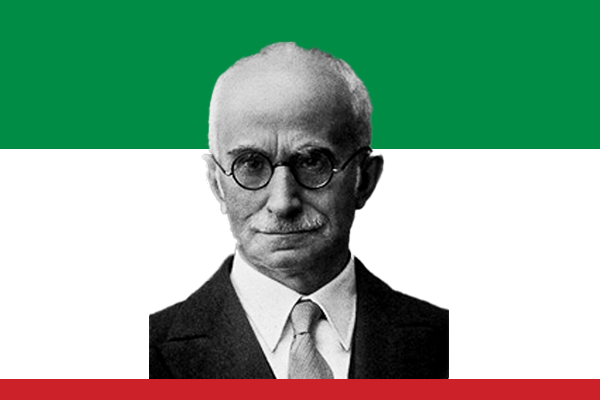
Early Life and Academic Foundations
Einaudi grew up in a modest family but displayed a deep curiosity for economics and politics from a young age. He studied law at the University of Turin and soon began teaching political economy. His lectures and writings actively promoted economic liberalism, fiscal responsibility, and free-market principles. He encouraged critical thinking among his students and inspired future economists to link theory with practical governance.
As a journalist and academic, Einaudi used newspapers and magazines to spread his ideas about economic reform. He actively criticized government corruption and wasteful spending, urging policymakers to adopt transparent and efficient economic practices. His early intellectual activism established his reputation as one of Italy’s most capable economic thinkers.
Political Involvement and Opposition to Fascism
When Benito Mussolini rose to power, Einaudi actively opposed the fascist regime. His criticism of authoritarianism and his defense of democracy forced him into temporary exile in Switzerland. During his time abroad, he continued to write influential essays that defended personal freedom, economic independence, and the rule of law. Through his academic work, he actively inspired resistance to totalitarian ideologies and kept liberal thought alive during Italy’s darkest political years.
Return to Public Service
After World War II, Einaudi returned to Italy to help rebuild the country. He joined the government as Minister of the Budget in 1947 and actively introduced policies that stabilized the Italian lira and curbed inflation. His firm belief in fiscal discipline guided his actions as he reduced public expenditure and balanced the national budget. These reforms restored confidence in Italy’s economy and earned him respect both at home and abroad.
Einaudi also served as Governor of the Bank of Italy, where he actively oversaw monetary reforms that strengthened Italy’s financial institutions. His leadership promoted transparency, stability, and long-term growth in the post-war economy.
Presidency and National Leadership
In 1948, the Italian Parliament elected Luigi Einaudi as President of the Republic. As head of state, he actively upheld the principles of the new Italian Constitution and ensured the independence of democratic institutions. He frequently advised government leaders to follow prudent economic and social policies that reflected national interest over political advantage.
Einaudi actively promoted education, scientific research, and civic responsibility. He viewed democracy not only as a political system but as a moral commitment to justice and equality. Through speeches and writings, he inspired Italians to rebuild their nation on the foundations of freedom, hard work, and economic stability.
Legacy and Contributions to Liberal Thought
After completing his presidential term in 1955, Einaudi continued to write, lecture, and guide young economists. He actively shaped post-war liberal economic thought in Italy and across Europe. His books and essays remain essential readings for those studying the intersection of economics and politics.
Einaudi’s approach combined intellectual rigor with moral integrity. He demonstrated that sound economic policy and honest governance could coexist, proving that political success relies on ethical leadership and long-term vision. His legacy continues to influence Italy’s economic philosophy and political culture.
Conclusion
Luigi Einaudi’s life reflects dedication to democratic values, intellectual honesty, and economic wisdom. He actively fought for liberty during oppression, rebuilt Italy after war, and led with integrity as President. Through his economic reforms and moral guidance, he ensured Italy’s transition into a stable, democratic, and prosperous republic. His leadership remains a shining example of how knowledge and ethics can shape a nation’s destiny.