Mr. Amintore Fanfani
In Office Term 1: 18 April 1987 – 29 July 1987
Term 2: 1 December 1982 – 4 August 1983
Term 3: 27 July 1960 – 22 June 1963
Term 4: 2 July 1958 – 16 February 1959
Term 5: 19 January 1954 – 10 February 1954
Political Party: Christian Democratic
Home State: Pieve Santo Stefano
Lifespan: 1908–1999
Country: Italy
Image credits available here.
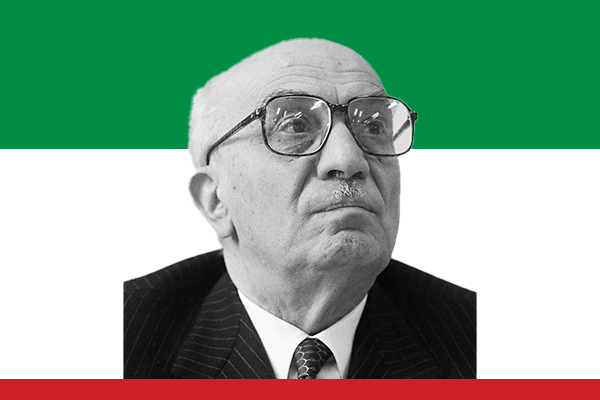
Early Life and Academic Career
Amintore Fanfani was born on February 6, 1908, in Pieve Santo Stefano, Italy. He pursued higher education in economics and social sciences, earning his degree from the Catholic University of Milan. As a professor, he actively taught political economy and influenced many students with his ideas on social ethics and economic development. His academic background gave him a strong foundation for his future political career and deep understanding of economic and social structures.
Entry into Politics
Fanfani entered politics through the Christian Democracy (Democrazia Cristiana, or DC) party after World War II. He actively participated in rebuilding Italy’s democratic institutions and contributed to drafting the new Italian Constitution. His intellectual strength and commitment to Christian social principles helped him gain recognition within the party. He actively supported policies that aimed to balance economic growth with social welfare, showing his early vision for an equitable Italian society.
Rise to Power
Fanfani’s political rise was rapid. He served in several key government positions, including Minister of Labor and Minister of the Interior, before becoming Prime Minister. As Minister of Labor, he actively introduced housing reforms and employment programs that improved living standards for working-class Italians. His leadership style combined strong administrative skills with a deep concern for social progress, earning him broad respect across political and public spheres.
Tenure as Prime Minister
Amintore Fanfani served six terms as Prime Minister between 1954 and 1987, reflecting his enduring influence in Italian politics. During his premierships, he actively pursued economic modernization, educational expansion, and infrastructure development. He championed industrial growth while promoting social policies that improved education, healthcare, and housing. Fanfani actively sought to reduce regional inequalities, strengthening the South through targeted development programs.
On the international front, he actively supported European integration and promoted Italy’s active participation in NATO and the United Nations. He worked to strengthen Italy’s global image as a democratic and economically stable nation. His diplomatic initiatives helped position Italy as a bridge between Europe and the developing world.
Vision for Social and Economic Reform
Fanfani actively believed in combining economic progress with moral responsibility. He emphasized human-centered development, encouraging policies that balanced capitalism with social justice. His government actively expanded public education, improved labor rights, and supported family welfare programs. He also played a vital role in promoting Italy’s “economic miracle,” the rapid industrial and economic growth during the 1950s and 1960s.
His reforms actively promoted home ownership and urban development, transforming Italian society and improving the quality of life for millions. Through careful planning and political negotiation, he strengthened Italy’s welfare state while maintaining fiscal discipline.
Legacy and Influence
Amintore Fanfani’s influence extended beyond his time in office. Even after leaving the premiership, he remained an active figure in both domestic and international politics. He served as President of the Senate and represented Italy at various global conferences. His writings and speeches continued to influence Christian Democratic thought and European politics for decades.
Fanfani actively demonstrated that moral integrity, social justice, and economic development could coexist in a democratic system. His leadership reshaped Italy’s post-war identity and inspired future generations of leaders to pursue balanced and ethical governance.
Conclusion
Amintore Fanfani actively guided Italy through a crucial era of reconstruction and modernization. His dedication to social reform, education, and international cooperation made him a defining figure in Italian political history. Through visionary leadership and unwavering commitment, Fanfani built a foundation for the Italy we know today—modern, democratic, and globally engaged.