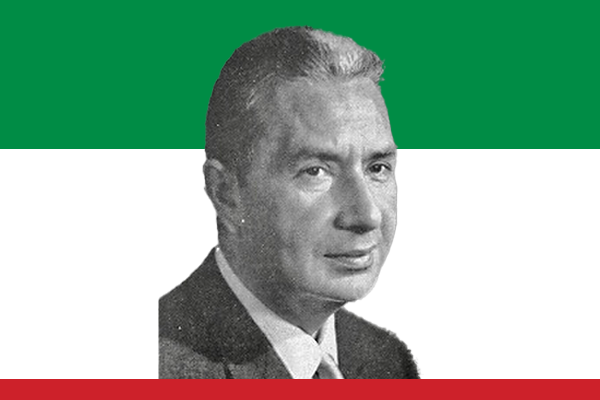
Early Political Engagement
Moro entered politics with a focus on education and social policy, actively contributing to legislative debates that would shape Italy’s post-war reconstruction. He served in local and regional political roles before entering the national stage, where he actively promoted policies to stabilize Italy’s economy and strengthen its democratic institutions. His legal background allowed him to approach complex political challenges with analytical rigor and practical solutions.
Rise to Leadership
By the 1950s and 1960s, Moro actively rose through the ranks of the Christian Democracy Party, demonstrating leadership qualities that earned him recognition across Italy. He actively participated in coalition negotiations, fostering dialogue between diverse political factions. Moro consistently emphasized compromise and collaboration, believing that Italy could achieve stability only through inclusive governance. His approach helped strengthen parliamentary democracy during a period of economic growth and social change.
Terms as Prime Minister
Aldo Moro served as Italy’s Prime Minister in multiple terms: 1963–1968 and 1974–1976. During his tenure, he actively guided national policies on economic development, education reform, and social welfare programs. He promoted labor rights, expanded social security, and initiated reforms to modernize Italy’s industrial and agricultural sectors. Moro actively negotiated with international partners, reinforcing Italy’s position within Europe and on the global stage.
The Historic “Historic Compromise”
Moro actively pioneered the “Historic Compromise,” a political strategy aimed at including the Italian Communist Party (PCI) in national dialogue without undermining democracy. He actively negotiated with leaders from across the political spectrum, emphasizing consensus over confrontation. This approach reflected his belief that political stability required bridging ideological divides and fostering cooperation, a philosophy that influenced Italian politics for decades.
Kidnapping and Legacy
In 1978, terrorists from the Red Brigades kidnapped Aldo Moro, demanding political concessions from the Italian government. Despite intense negotiations, the government did not concede, and Moro tragically lost his life after 55 days in captivity. His death shook Italy but also strengthened the nation’s resolve against terrorism. Moro’s courage, vision, and commitment to democracy continue to inspire political leaders and citizens alike.
Lasting Influence
Aldo Moro’s career left a profound impact on Italian politics and governance. He actively shaped policies that balanced economic growth with social equity, promoted democratic dialogue, and strengthened Italy’s role in Europe. Scholars and politicians frequently reference his strategies and writings, highlighting his skill in navigating complex political landscapes with ethical integrity and pragmatism.
Aldo Moro’s life reflects dedication, courage, and visionary leadership. Through active engagement in Italy’s political system, he consistently pursued policies that promoted stability, social progress, and inclusive governance. Even decades after his passing, Moro’s contributions continue to influence Italian democracy and political thought.