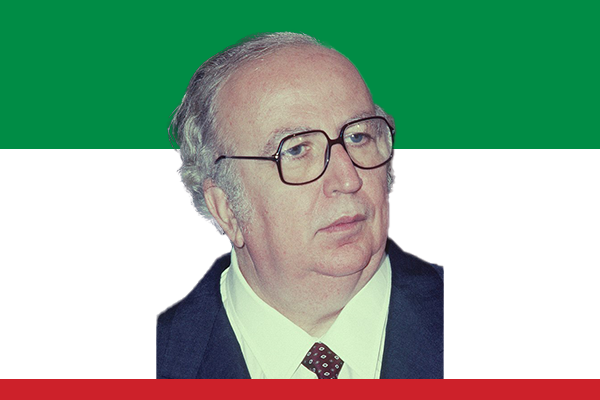
Prime Minister Giovanni Spadolini: Italy’s Pioneering Leader
Giovanni Spadolini, born on June 21, 1925, in Florence, Italy, actively shaped Italian politics during a period of significant change. A historian, journalist, and politician, Spadolini combined intellectual rigor with pragmatic governance, leaving a lasting mark on Italy’s political landscape. His career demonstrates a commitment to public service, reform, and modernizing Italy’s political institutions.
Early Life and Education
Spadolini actively pursued academic excellence from a young age. He studied law and philosophy at the University of Florence, where he graduated with honors. His passion for history and politics led him to teach and write extensively, actively influencing public opinion through his articles and essays. Spadolini’s early intellectual contributions built a foundation for his later political leadership.
Entry into Politics
Spadolini joined the Italian Republican Party (PRI) in the post-World War II era, actively participating in party activities and national debates. He served as a deputy in the Italian Parliament beginning in 1972, where he actively advocated for transparency, institutional reform, and social modernization. His eloquence and deep understanding of Italy’s political challenges earned him respect across party lines.
Leadership in the Republican Party
In 1979, Spadolini became the secretary of the PRI. He actively reformed the party’s structure, strengthened its influence in national politics, and promoted liberal democratic values. Under his leadership, the PRI actively participated in coalition governments, contributing to key policy decisions on economic modernization, education, and civil liberties. Spadolini emphasized the need for political integrity and ethical governance, actively challenging corruption and inefficiency in public administration.
Prime Minister of Italy
Giovanni Spadolini made history in 1981 by becoming Italy’s first non-Christian Democrat Prime Minister since World War II. During his tenure, he actively implemented policies to stabilize the economy, improve public administration, and strengthen Italy’s international standing. Spadolini actively negotiated with trade unions, regional governments, and international partners to advance Italy’s development goals. His leadership demonstrated pragmatism, intellectual depth, and a commitment to reforming Italy’s political culture.
Ministerial Roles
Beyond his role as Prime Minister, Spadolini actively served in multiple ministerial positions. As Minister of Culture, he promoted Italy’s rich artistic and historical heritage, actively supporting cultural institutions and education programs. His initiatives modernized the administration of Italy’s museums, libraries, and archives, reflecting his lifelong dedication to history and culture. In other roles, he actively shaped policies related to defense, education, and international relations, consistently advocating for efficiency and accountability in government.
Influence and Legacy
Spadolini actively contributed to Italian public life even after leaving high-profile offices. He continued writing, teaching, and advising political leaders, influencing debates on governance, European integration, and public ethics. His leadership emphasized principled politics, institutional reform, and intellectual engagement with the challenges of modern Italy. Many historians and political analysts actively cite Spadolini’s tenure as a model of ethical and effective leadership during a complex period in Italian politics.
Giovanni Spadolini’s career reflects active leadership, intellectual rigor, and a commitment to modernizing Italy’s political institutions. From his early work as a historian and journalist to becoming Prime Minister, Spadolini actively shaped Italy’s political, cultural, and institutional development, leaving a legacy of reform, integrity, and public service.