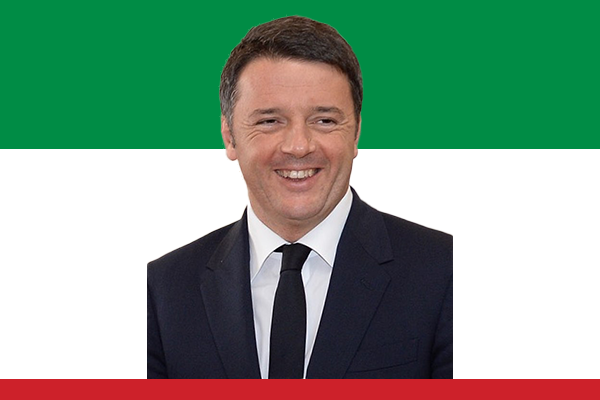
Prime Minister Matteo Renzi: The Reformer of Modern Italy
Matteo Renzi, one of Italy’s most dynamic and youngest prime ministers, actively reshaped the nation’s political and economic systems. Born on January 11, 1975, in Florence, Renzi entered politics with a vision of modernization, efficiency, and renewal. As the leader of the Democratic Party (Partito Democratico, PD), he actively championed reforms that aimed to revitalize Italy’s governance, economy, and global reputation.
Early Political Career
Renzi began his political journey in local government, where he actively demonstrated leadership and a drive for innovation. In 2004, he became the President of the Province of Florence, focusing on administrative transparency and digital modernization. By 2009, he had won the mayoral election in Florence, where he actively transformed the city’s governance. He streamlined bureaucracy, promoted cultural initiatives, and improved infrastructure. His success as mayor earned him the nickname “The Scrapper” (Il Rottamatore) for his determination to challenge Italy’s old political establishment.
Rise to National Leadership
In 2013, Renzi became the Secretary of the Democratic Party, promising a new direction for Italian politics. He actively pushed for generational renewal within the party, replacing long-serving politicians with younger, reform-minded leaders. Renzi presented himself as a modern, pragmatic leader focused on efficiency, growth, and transparency. His charisma and communication skills attracted both national and international attention, positioning him as a transformative figure ready to lead Italy through change.
Prime Minister of Italy
Matteo Renzi became Italy’s Prime Minister on February 22, 2014, at just 39 years old — the youngest in Italian history. He immediately launched an ambitious reform agenda aimed at revitalizing Italy’s stagnant economy and outdated institutions. Renzi actively reformed the labor market through the Jobs Act, which aimed to increase employment and simplify regulations. He pursued constitutional reforms to reduce political gridlock and improve government stability.
Renzi also actively promoted education reform, improving school funding and introducing digital technology in classrooms. His government modernized Italy’s public administration, reduced bureaucracy, and encouraged entrepreneurship. He consistently advocated for Italy’s active role in the European Union, emphasizing growth-friendly fiscal policies and greater flexibility for member states.
Foreign Policy and European Role
As Prime Minister, Renzi actively strengthened Italy’s international presence. He worked closely with European leaders to address economic challenges, migration crises, and global security issues. Renzi advocated for shared European responsibility in managing immigration and economic reform. He emphasized diplomacy, modernization, and unity within the European Union. His leadership style combined assertiveness with negotiation, allowing him to represent Italy as a confident and reform-driven nation.
Resignation and Later Career
After his proposed constitutional reform was rejected in a 2016 referendum, Renzi resigned as Prime Minister. However, he continued to play an active role in Italian politics. He later founded Italia Viva, a centrist political party promoting innovation, economic reform, and European cooperation. Renzi remained vocal on issues such as education, economic development, and democratic renewal, continuing to influence Italy’s political discourse.
Legacy and Impact
Matteo Renzi’s tenure as Prime Minister marked a turning point in Italy’s modern history. He actively pursued change in a political system long dominated by tradition and bureaucracy. His reforms in labor, education, and public administration reflected a forward-looking vision that emphasized youth, digitalization, and competitiveness.
Although his government faced criticism for its bold pace and ambitious scope, Renzi’s leadership introduced a new era of energy and pragmatism into Italian politics. His legacy endures as that of a leader who actively challenged convention, modernized governance, and inspired a new generation to engage with Italy’s future.