ITALY
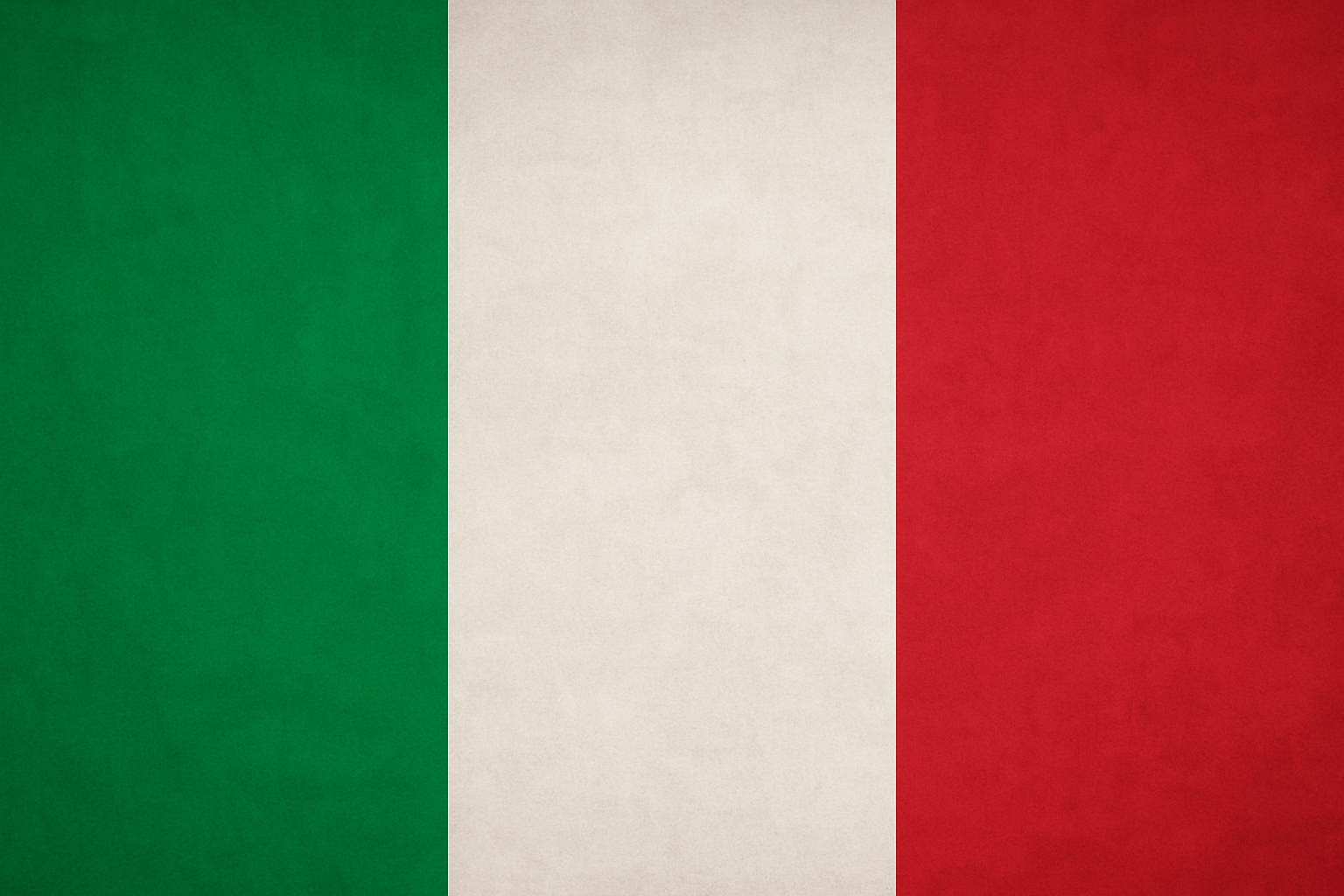
Italy Flag
The flag of Italy, known as Il Tricolore, features three equal vertical bands of green, white, and red. Adopted on January 1, 1948, it symbolizes hope, faith, and charity. The green represents the country’s plains and hills, white stands for the snowy Alps, and red honors the blood shed for independence and unification. Inspired by the French flag, Italy’s Tricolore reflects national pride, unity, and the enduring spirit of the Italian people.
Italy: The Land of History, Culture, and Innovation
Italy, located in Southern Europe, is a nation celebrated for its rich history, art, and culture. From the legacy of the Roman Empire to the brilliance of the Renaissance, Italy has shaped global civilization. Its diverse landscapes, from the Alps to Mediterranean coastlines, attract millions of visitors yearly. Italy thrives on creativity, blending tradition with modern innovation in fashion, design, and cuisine. Cities like Rome, Florence, and Venice showcase timeless beauty and architectural marvels. With its deep heritage and forward-thinking spirit, Italy continues to inspire the world as a symbol of culture and excellence.
Geography and Landscape
Italy’s geography is diverse and captivating. The country stretches from the towering Alps in the north to the sunlit beaches of Sicily in the south. The Apennine Mountains run through its center, dividing regions into distinct landscapes. Italy’s long coastline, dotted with islands like Sardinia and Capri, gives it a Mediterranean charm. Major rivers such as the Po and Tiber have nourished settlements for centuries, while fertile plains support agriculture and vineyards.
Historical Significance
Italy has played a central role in world history. It was the heart of the Roman Empire, which laid the foundations for Western civilization, law, and architecture. After the fall of Rome, the Italian Peninsula became home to independent states and powerful city-states such as Venice, Florence, and Milan. These centers of trade and art gave birth to the Renaissance—a movement that revolutionized art, science, and philosophy. Figures like Leonardo da Vinci, Michelangelo, and Galileo emerged from this golden era, shaping global culture and knowledge.
Political System and Economy
Modern Italy is a parliamentary republic with a President as head of state and a Prime Minister leading the government. The country actively participates in the European Union, NATO, and the United Nations. Italy’s economy ranks among the world’s largest, driven by industries such as fashion, automobiles, tourism, and design. Cities like Milan lead global fashion trends, while Italian carmakers such as Ferrari, Lamborghini, and Fiat symbolize craftsmanship and innovation.
Art, Culture, and Cuisine
Italy’s culture celebrates art, family, and tradition. The nation is home to countless museums, cathedrals, and UNESCO World Heritage Sites. Italian cuisine—famous for its pasta, pizza, olive oil, and wines—reflects the country’s regional diversity and passion for quality ingredients. Festivals, music, and opera continue to enrich Italian life, making it a symbol of cultural excellence.
Modern Italy
Today, Italy blends history with modernity. It remains a world leader in design, fashion, and technology while preserving its artistic heritage. From the Colosseum in Rome to the canals of Venice, every part of Italy tells a story of resilience, creativity, and pride.