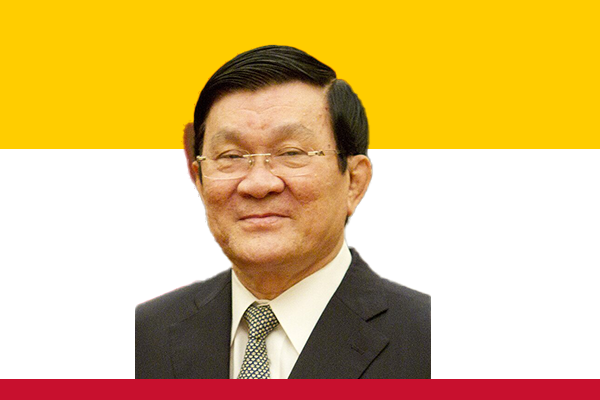
Early Life and Education
Trương Tấn Sang was born on January 21, 1949, in Long An Province, Vietnam. He grew up during a turbulent period in the country’s history, which deeply influenced his patriotic spirit. As a young man, he showed great interest in political and social issues. After completing his education, he studied at the National School of Public Administration, where he gained knowledge that later shaped his political career.
Entry into Politics
Trương Tấn Sang joined the Communist Party of Vietnam in 1969, marking the start of a lifelong commitment to public service. He actively participated in revolutionary activities during the Vietnam War and worked to strengthen local administrative systems. His dedication and leadership abilities earned him recognition from senior party officials. Over the years, he rose through the ranks, taking on important roles in both local and national government.
Rise Through Party Leadership
In the 1980s and 1990s, Trương Tấn Sang held several key positions in Ho Chi Minh City’s government. As the city’s Party Secretary, he introduced policies that promoted economic reform and urban modernization. He encouraged private enterprise while maintaining socialist principles, creating a balance between growth and equity. Under his guidance, Ho Chi Minh City became one of Vietnam’s leading economic centers. His success at the local level paved the way for national leadership roles.
Role in National Governance
Trương Tấn Sang entered the Politburo, the highest decision-making body of the Communist Party of Vietnam, where he influenced national policy on economic and political reforms. He emphasized transparency, anti-corruption measures, and efficient governance. His commitment to the nation’s development gained him respect across political circles. He worked to strengthen Vietnam’s institutions and improve public trust in government.
Presidency and Leadership Style
In July 2011, the National Assembly elected Trương Tấn Sang as the President of the Socialist Republic of Vietnam. As president, he represented the state in domestic and international affairs and worked closely with other branches of government to promote development. He emphasized the importance of unity, stability, and the rule of law.
Trương Tấn Sang focused on deepening Vietnam’s international relations while maintaining its independence and sovereignty. He encouraged foreign investment and economic cooperation to enhance national prosperity. His leadership reflected a calm, pragmatic, and reform-oriented approach that aimed to balance tradition with modernization.
Economic and Social Reforms
During his presidency, Trương Tấn Sang prioritized sustainable economic growth. He supported policies that diversified Vietnam’s economy, expanded exports, and attracted foreign investors. He also advocated for agricultural modernization to improve rural livelihoods. On social issues, he emphasized poverty reduction, education, and healthcare reforms. He believed that economic success should go hand in hand with social welfare and environmental protection.
Foreign Policy and International Relations
Trương Tấn Sang strengthened Vietnam’s diplomatic presence on the global stage. He promoted peaceful relations with neighboring countries and sought to resolve disputes through dialogue. He worked to enhance Vietnam’s role within the Association of Southeast Asian Nations (ASEAN) and fostered partnerships with major global powers. His foreign policy emphasized balance, cooperation, and mutual respect.
Legacy and Impact
Trương Tấn Sang left a lasting legacy as a leader who combined patriotism with practical governance. He guided Vietnam through a critical period of modernization and integration into the global economy. His focus on reform, transparency, and international cooperation inspired confidence in Vietnam’s future. Even after completing his presidential term in 2016, he remained an influential figure who continued to contribute to the country’s development through advice and advocacy.
Conclusion
President Trương Tấn Sang’s tenure marked a time of progress and stability for Vietnam. His leadership emphasized integrity, economic reform, and international engagement. Through his vision and dedication, he strengthened Vietnam’s position both at home and abroad, leaving a significant mark on the nation’s journey toward modernization.