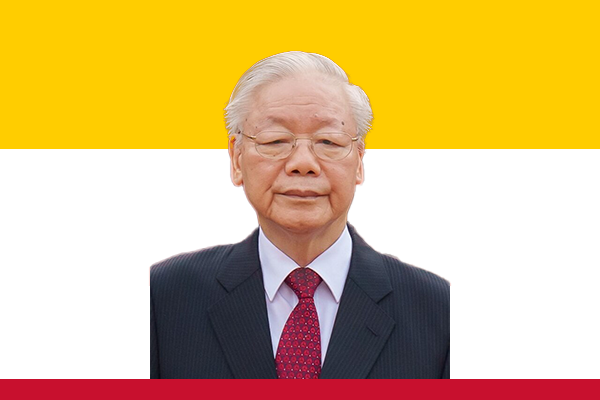
Early Life and Education
Nguyễn Phú Trọng was born on April 14, 1944, in Dong Anh District, Hanoi, Vietnam. He grew up in a modest family that valued education and patriotism. As a young student, he displayed a deep interest in literature, politics, and national development. He studied Philology at Hanoi University, where he developed strong analytical and communication skills. His passion for socialism and national progress guided his academic and political journey.
Early Political Career
After graduation, Nguyễn Phú Trọng began his career as an editor for the Communist Review, the official theoretical and political journal of the Communist Party of Vietnam. He used his position to promote Marxist-Leninist principles and strengthen ideological education. His commitment and discipline quickly earned him recognition among party members. Through his editorial work, he influenced political thought and contributed to shaping the country’s ideological foundation.
Rise Within the Communist Party
Nguyễn Phú Trọng joined the Communist Party of Vietnam in 1967. Over the years, he advanced through various important positions within the party. He served as Secretary of the Hanoi Party Committee, where he demonstrated strong organizational skills and deep loyalty to the Party’s values. His ability to connect with the people and manage complex political issues helped him gain trust among senior leaders. He later became Chairman of the National Assembly, one of Vietnam’s top leadership roles.
Becoming General Secretary
In 2011, Nguyễn Phú Trọng became the General Secretary of the Communist Party of Vietnam, the most powerful position in the country. As General Secretary, he led the Party with a vision focused on stability, integrity, and socialist development. He emphasized the importance of political unity, moral leadership, and social harmony. Under his direction, Vietnam maintained consistent economic growth and strong political stability.
Anti-Corruption Campaign
One of Nguyễn Phú Trọng’s most defining achievements is his vigorous anti-corruption campaign. He launched the “blazing furnace” movement, which targeted corruption within the government and the Party. He personally supervised major investigations, ensuring that even high-ranking officials faced accountability. His strict yet fair approach won public support and restored trust in Vietnam’s political system. By reinforcing transparency and discipline, he strengthened the Party’s moral foundation and administrative efficiency.
Presidency and Dual Leadership
In 2018, after the passing of President Trần Đại Quang, Nguyễn Phú Trọng took on the role of President of Vietnam while continuing to serve as General Secretary. This marked a historic moment, as he became the first leader since Ho Chi Minh to hold both positions simultaneously. As president, he represented Vietnam in international diplomacy, strengthened relations with global partners, and promoted peace and cooperation in Southeast Asia. His leadership brought a unified and stable vision to Vietnam’s political system.
Focus on Economic and Social Development
President Nguyễn Phú Trọng prioritized sustainable economic development and poverty reduction. He encouraged investment in technology, education, and infrastructure while ensuring that growth benefited all citizens. He balanced modernization with Vietnam’s socialist orientation, promoting equality and collective welfare. His government also worked to protect cultural identity and uphold traditional values in the face of globalization.
Leadership Philosophy
Nguyễn Phú Trọng believes that strong leadership comes from integrity and dedication to the people. He often emphasizes moral conduct, discipline, and ideological commitment among Party members. He promotes the idea that true leadership requires humility, selflessness, and a deep understanding of Vietnam’s historical journey. His speeches and writings reflect his belief that socialism remains central to the nation’s success.
Legacy and Influence
President Nguyễn Phú Trọng leaves behind a powerful legacy of honesty, discipline, and stability. His leadership strengthened Vietnam’s political system, curbed corruption, and elevated the country’s international reputation. He built trust between the Party and the people while ensuring steady progress in all sectors. Under his guidance, Vietnam emerged as one of Asia’s most stable and growing economies.