Mr. Ton Duc Thang
In Office: July 15, 1960 – September 2, 1969
Political Party: Socialist Republic of Vietnam
Home State: Long Xuyên
Lifespan: 1888–1980
Country: Vietnam
Image credits available here.
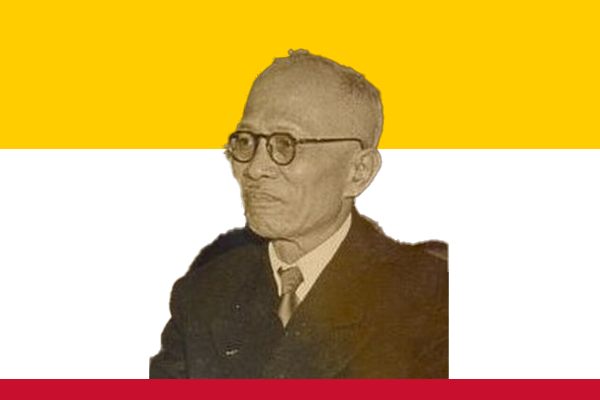
Early Life and Revolutionary Beginnings
Tôn Đức Thắng was born on August 20, 1888, in An Giang Province, Vietnam. He grew up in a humble family that valued hard work and patriotism. From a young age, he showed a strong sense of justice and empathy for the poor. As a young man, he studied mechanics and worked at a shipyard in Saigon, where he witnessed the exploitation of Vietnamese workers under colonial rule. Motivated by these injustices, he decided to join the national movement against French colonialism.
In 1911, he traveled to France as a mechanic and soon became active in labor movements. He joined French trade unions and participated in strikes, supporting the rights of workers and the liberation of colonized nations. His time in France deepened his understanding of Marxism and socialism. He used his experiences to spread revolutionary ideas among Vietnamese workers abroad.
Role in the Anti-Colonial Struggle
After returning to Vietnam, Tôn Đức Thắng continued his revolutionary work. He founded and led labor organizations to fight for workers’ rights and independence. When the French authorities began suppressing revolutionary activities, he went underground and joined the early movements that later became part of the Communist Party of Vietnam.
During the 1920s and 1930s, he helped organize strikes, uprisings, and resistance efforts against colonial forces. The French colonial government arrested him in 1929 for his revolutionary activities and sentenced him to prison on Côn Đảo Island. Despite harsh conditions, he remained steadfast in his beliefs. He inspired fellow prisoners by organizing study groups and secret political meetings inside the prison, transforming it into a school of revolution.
Contributions to Independent Vietnam
After his release in 1945, Tôn Đức Thắng immediately joined the national effort to build an independent Vietnam. When the August Revolution succeeded, he worked closely with President Hồ Chí Minh to establish a new government. His dedication and integrity earned him the trust of the Communist Party and the people.
As the nation faced the challenges of the First Indochina War and later the Vietnam War, Tôn Đức Thắng continued to serve in key leadership positions. In 1960, he became Vice President of North Vietnam. In this role, he supported industrial development, national unity, and the welfare of workers and peasants. He encouraged citizens to strengthen production and resist foreign aggression. His calm leadership and strong moral character made him a symbol of perseverance during the war years.
Presidency and Legacy
After the death of President Hồ Chí Minh in 1969, Tôn Đức Thắng succeeded him as the President of North Vietnam. He continued to promote Hồ Chí Minh’s ideals and worked to unify the country. When Vietnam reunified in 1976, he became the first President of the Socialist Republic of Vietnam. Under his leadership, the government rebuilt the war-torn nation, expanded education, and promoted social equality.
Tôn Đức Thắng remained a humble leader who always prioritized the needs of the people. He lived a simple life, devoted entirely to the nation’s independence and progress. His honesty and modesty earned him deep respect from both domestic and international communities. He passed away on March 30, 1980, leaving behind a legacy of integrity, sacrifice, and patriotism.
Conclusion
Vice President Tôn Đức Thắng played an essential role in Vietnam’s journey from colonial rule to independence and unity. His lifelong commitment to the ideals of socialism and justice continues to inspire generations. Through his actions, he showed how courage, discipline, and loyalty can shape a nation’s destiny.