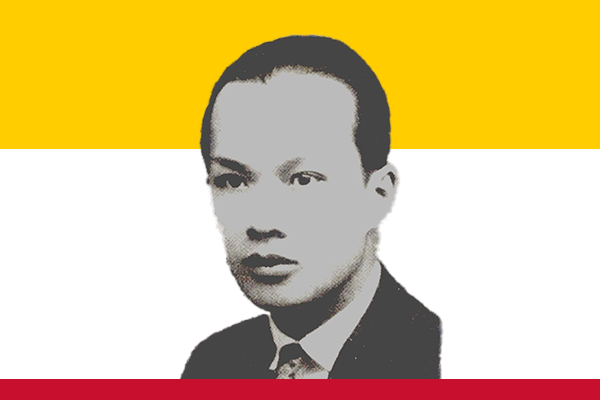
Early Life and Education
Nguyễn Hữu Thọ was born on July 10, 1910, in Bến Lức District, Long An Province, in southern Vietnam. He grew up in a patriotic family that valued education and national pride. He pursued law studies at the University of Indochina in Hanoi, where he developed a deep awareness of colonial oppression. As a young lawyer, he began defending political prisoners and opposing French colonial policies. His legal work helped him connect with nationalists who sought independence for Vietnam.
Political Awakening and Revolutionary Activities
Nguyễn Hữu Thọ quickly realized that political independence required more than legal reforms. He joined the anti-colonial movement and became an active participant in protests against French domination. In the 1940s and 1950s, he used his influence as an intellectual to promote unity among Vietnamese people. The French authorities arrested and imprisoned him several times because of his political activities, but his spirit remained unbroken.
After the Geneva Accords of 1954, which temporarily divided Vietnam, Nguyễn Hữu Thọ continued to fight for national reunification. He helped establish the National Liberation Front (NLF) of South Vietnam in 1960, an organization that aimed to end foreign interference and reunify the country under one government. As Chairman of the NLF, he became one of the most prominent political figures in the resistance against American intervention.
Leadership during the Vietnam War
During the Vietnam War, Nguyễn Hữu Thọ played a crucial diplomatic and political role. He worked tirelessly to mobilize both domestic and international support for the NLF. He emphasized unity among all Vietnamese regardless of social background or ideology, believing that solidarity was the foundation of victory.
He frequently addressed rallies, led delegations, and inspired thousands to join the revolutionary cause. His calm and persuasive speeches helped strengthen the morale of the southern resistance movement. Nguyễn Hữu Thọ also represented the NLF at international conferences, where he defended Vietnam’s right to self-determination and sovereignty.
Vice Presidency and National Reconstruction
After the reunification of Vietnam in 1976, Nguyễn Hữu Thọ took on major responsibilities in the new government. The National Assembly elected him Vice President of the Socialist Republic of Vietnam. In this role, he worked to rebuild a war-torn nation, promote social equality, and strengthen the legal system. He encouraged educational reforms and urged citizens to participate actively in national development.
Nguyễn Hữu Thọ also served as Acting President of Vietnam for a period in 1980–1981 after President Tôn Đức Thắng passed away. During this transitional time, he maintained political stability and continued to guide the country toward socialist progress. His dedication to unity and reconstruction earned him respect from leaders and citizens alike.
Legacy and Influence
Nguyễn Hữu Thọ’s contributions to Vietnam’s liberation and reconstruction continue to inspire generations. He combined intellect with courage and diplomacy with determination. His life demonstrated that moral strength and patriotism could shape history. Even after his death on December 24, 1996, his legacy remains alive in the hearts of the Vietnamese people.
His efforts to promote peace, independence, and justice marked him as one of Vietnam’s most respected revolutionary leaders. As Vice President, lawyer, and patriot, Nguyễn Hữu Thọ symbolized Vietnam’s resilience and unity in the face of adversity.
Conclusion
Nguyễn Hữu Thọ lived a life devoted to his country’s freedom and progress. Through leadership, sacrifice, and unwavering belief in Vietnam’s destiny, he helped transform a divided nation into a unified, independent state. His name stands proudly among those who shaped modern Vietnam through courage, conviction, and love for the homeland.