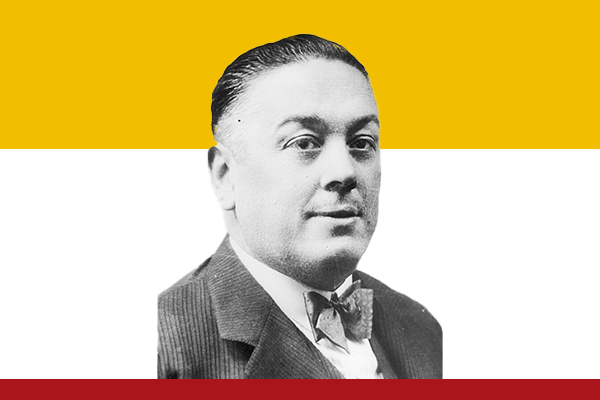
Early Life and Political Beginnings
Diego Martínez Barrio was born on November 25, 1883, in Seville, Spain. He grew up in a humble family and developed a deep passion for learning and public service. From a young age, he showed a strong interest in social justice and politics. He actively participated in civic discussions that shaped his early political beliefs. Motivated by the growing liberal movements in Spain, Martínez Barrio joined the Republican cause and began his political journey advocating for reform and democracy.
As a young man, he entered journalism, where he wrote fearlessly about inequality and corruption. His writings attracted attention and helped him gain popularity among progressive circles. Instead of standing aside, Martínez Barrio used his voice to demand fairness and the modernization of Spanish society. His courage and commitment to democratic values opened the path to his future leadership roles.
Rise in the Second Spanish Republic
When the Second Spanish Republic was established in 1931, Martínez Barrio emerged as one of its most capable leaders. He took an active part in drafting reforms and shaping the new political system. As a member of the Radical Republican Party, he focused on social justice, education, and secular governance. He served as Speaker of the Cortes (Spanish Parliament), where he promoted dialogue and unity among political factions.
In 1933, he became Prime Minister, where he actively tried to balance the competing interests of conservatives and radicals. Rather than fueling division, he encouraged compromise to stabilize Spain’s fragile democracy. Although his government faced political challenges, Martínez Barrio acted with integrity and a genuine desire to serve the people. His belief in moderation distinguished him in an era dominated by extremism.
Leadership During the Spanish Civil War
When the Spanish Civil War erupted in 1936, Martínez Barrio stood firmly for peace and reconciliation. After the military uprising against the Republic, President Manuel Azaña appointed him to form a government that could halt the conflict. Martínez Barrio immediately reached out to both sides, urging unity to prevent further bloodshed. He personally called rebel generals to negotiate a peaceful resolution, but his appeal was rejected.
Even in failure, his actions reflected his deep commitment to democracy and humanity. He refused to join any faction that promoted violence or dictatorship. Instead, he chose exile and continued to speak against tyranny. In France and later Mexico, he worked tirelessly to preserve the spirit of the Republic and protect exiled Spaniards.
Exile and Final Years
In exile, Martínez Barrio did not abandon his political mission. He became President of the Republican government-in-exile after Azaña’s death in 1940. From that position, he represented democratic Spain before the international community. He coordinated aid for refugees, maintained diplomatic relations, and defended the principles of liberty and justice.
Throughout his later years, he continued to write and advocate for a free Spain. Despite the hardships of exile, he never lost faith in democracy. He died in Paris on January 1, 1949, but his legacy survived in the ideals he defended.
Legacy and Influence
Diego Martínez Barrio remains one of the most respected figures of the Second Spanish Republic. His life demonstrated moral strength, political moderation, and loyalty to democratic ideals. Instead of resorting to violence or vengeance, he believed in dialogue, tolerance, and respect for human rights. Historians view him as a symbol of Spain’s democratic spirit during one of its darkest periods.
Through his actions and words, Martínez Barrio showed that genuine leadership means courage, empathy, and commitment to peace. His legacy continues to inspire those who value democracy and human dignity.