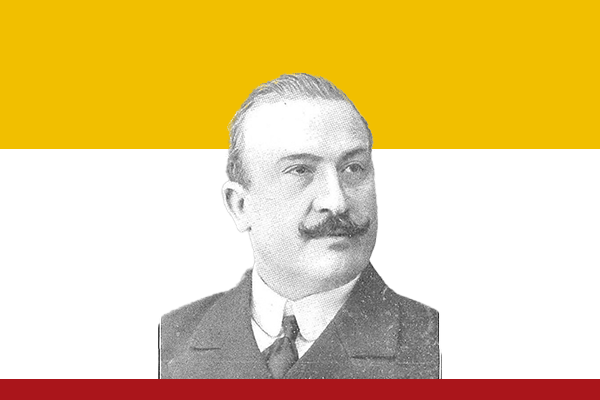
Early Life and Political Awakening
Alejandro Lerroux was born in La Rambla, Córdoba, Spain, in 1864. From a young age, he developed a strong interest in politics and journalism. He embraced liberal ideas and used his voice to challenge the monarchy and social injustices that dominated Spanish society. As a journalist, he attacked corruption and religious influence in politics, inspiring young Spaniards to demand change. His fiery speeches earned him a reputation as a radical reformer and a champion of the working class.
Lerroux’s early involvement in republican movements laid the foundation for his future as a national leader. He joined the Radical Republican Party and used his oratory to attract supporters from the lower and middle classes. He called for equality, education, and secular governance, believing that Spain could modernize only through democratic reforms.
Rise to Prominence in Republican Politics
In the early 20th century, Lerroux led the Radical Republican Party with a clear mission—to establish a secular and progressive Spain. He actively participated in anti-monarchist campaigns and urged citizens to reject aristocratic privilege. His charisma and political determination made him one of the most influential opposition figures during the final years of the Spanish monarchy.
When Spain proclaimed the Second Republic in 1931, Lerroux’s lifelong dream of a republican government became reality. He helped draft new policies that separated church and state, expanded public education, and promoted civil liberties. His leadership in the Cortes (parliament) reflected his belief in freedom of expression and equality under the law.
Prime Ministerial Leadership and Reforms
Alejandro Lerroux served several terms as Prime Minister during the turbulent years of the Second Republic, notably between 1933 and 1935. He faced immense challenges, including political divisions, economic struggles, and growing social unrest. Despite the instability, he worked to maintain democratic order and prevent extremism from either the far left or right.
Lerroux promoted moderation and cooperation between parties. He implemented social reforms to improve education, labor conditions, and infrastructure. His government encouraged dialogue and attempted to balance the demands of workers with the interests of business leaders. He also defended secular education and continued his campaign against clerical influence in public affairs.
However, Lerroux’s government faced constant opposition from both conservatives and socialists. His moderate stance often made him a target for criticism. Still, he acted decisively to preserve constitutional order and parliamentary democracy when Spain’s fragile political system was under threat.
Controversy and Decline
Lerroux’s career took a dramatic turn in 1935 when the “Straperlo scandal,” a corruption case involving gambling licenses, emerged. Although he was not directly proven guilty, the controversy damaged his reputation and weakened his political influence. Many former allies distanced themselves from him, and his Radical Republican Party lost public trust.
After resigning from office, Lerroux gradually withdrew from politics. The outbreak of the Spanish Civil War in 1936 marked the end of his political era. He moved away from the public scene and lived quietly until his death in Madrid in 1949.
Legacy of a Radical Republican
Alejandro Lerroux’s legacy remains complex. Supporters remember him as a courageous reformer who defended democracy, secularism, and education. Critics view him as an opportunist who failed to maintain unity within the Republic. Despite controversies, his contributions to Spain’s political modernization and his role in shaping the early years of the Second Republic cannot be ignored.
Lerroux’s active leadership, bold ideas, and commitment to liberal values left a lasting imprint on Spanish history. He symbolized the struggle for a modern, democratic Spain that sought freedom and justice amid turbulent times.