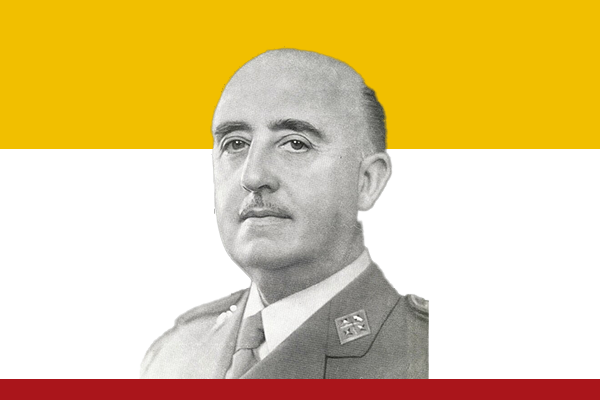
Early Life and Military Career
Francisco Franco was born on December 4, 1892, in Ferrol, Spain. He grew up in a naval family and developed a strong sense of discipline and patriotism early in life. Franco joined the Spanish Army at the age of 14, showing a remarkable commitment to military order and hierarchy. He earned rapid promotions due to his strict command style and tactical skill. During the Rif War in Morocco, Franco distinguished himself as a brave officer and became the youngest general in Europe by 1926. His military success built his reputation as a disciplined and loyal nationalist.
Rise to Power
Franco seized the opportunity to rise politically during Spain’s turbulent 1930s. When the Spanish Civil War erupted in 1936, he took control of the Nationalist forces, uniting various conservative and monarchist factions under his leadership. He strategically consolidated military and political power, turning his position into that of Spain’s chief authority. Franco directed the war with ruthless efficiency, crushing opposition forces and establishing dominance over the country. After the Nationalists’ victory in 1939, he declared himself Head of State and Prime Minister, beginning a dictatorship that would last nearly four decades.
Establishing an Authoritarian Regime
Franco centralized power under his control, dismantling democratic institutions and outlawing political parties. He banned trade unions and imposed strict censorship to silence dissent. Franco used propaganda to glorify his rule and present himself as the savior of Spain from communism and anarchy. He reinstated traditional Catholic values and strengthened the influence of the Church, positioning religion as a core pillar of his regime. His secret police maintained surveillance and suppressed political opposition through imprisonment, exile, and execution. Franco’s policies reshaped Spain into an authoritarian state governed by obedience and fear.
Domestic and Economic Policies
Franco steered Spain toward self-sufficiency in the early years of his rule. He rejected foreign influence and directed the economy through state control. His policies initially isolated Spain from the rest of Europe, leading to economic hardship and stagnation. However, in the 1950s and 1960s, Franco adapted to changing circumstances. He allowed limited economic liberalization and invited foreign investment. This pragmatic shift triggered what became known as the “Spanish Miracle,” a period of rapid industrial growth and modernization. Franco’s government emphasized infrastructure development, tourism, and export industries, turning Spain into a more stable and economically active nation by the 1970s.
Foreign Relations and Neutrality
Franco maintained a cautious approach in international affairs. During World War II, he avoided direct involvement, keeping Spain officially neutral while sympathizing with Axis powers. After the war, he skillfully repositioned Spain to gain favor with the West. By aligning with anti-communist sentiments during the Cold War, Franco secured diplomatic recognition and economic aid from the United States. His foreign policy focused on preserving Spain’s sovereignty and strengthening its global presence without compromising his regime’s control.
Legacy and Death
Franco ruled Spain until his death on November 20, 1975. He appointed Prince Juan Carlos as his successor, believing that the monarchy would preserve his legacy. However, Spain transitioned toward democracy shortly after his passing, marking the end of one of Europe’s longest dictatorships. Franco’s rule left a divided legacy — many credited him with maintaining national unity and modernizing Spain, while others condemned his repressive methods and denial of basic freedoms. His authoritarian leadership remains one of the most debated chapters in Spanish history.