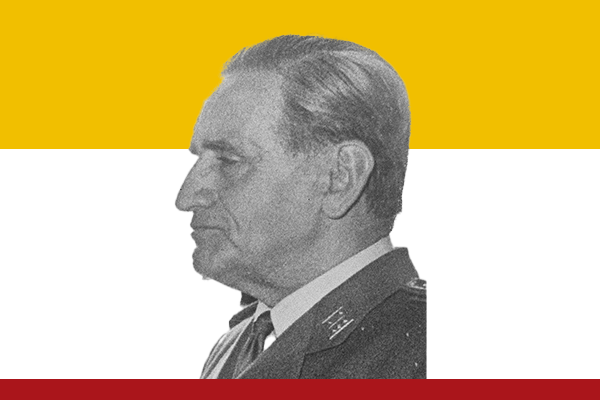
Early Military Career and Rise to Prominence
Agustín Muñoz Grandes built his reputation through courage, discipline, and strong command in the Spanish Army. Born in Madrid in 1896, he chose a military career early and joined the Infantry Academy of Toledo. His dedication and tactical intelligence helped him advance quickly through the ranks. During the Rif War in Morocco, he demonstrated his leadership skills by leading troops in several successful operations. His actions in North Africa established him as one of Spain’s most capable officers.
Role in the Spanish Civil War
When the Spanish Civil War began in 1936, Muñoz Grandes immediately aligned with General Francisco Franco’s Nationalist forces. He commanded various military units and took part in decisive campaigns that shaped the outcome of the war. He led his troops with determination, ensuring strategic victories that strengthened the Nationalist position. His ability to coordinate operations and maintain morale among soldiers earned him the trust of Franco and his fellow officers.
Leadership in World War II
After the Civil War, Muñoz Grandes continued to serve under Franco’s regime. When World War II broke out, he played a major role in forming and commanding the Blue Division, a volunteer force sent to support Nazi Germany on the Eastern Front against the Soviet Union. He led the division with precision and discipline, showing both tactical expertise and strong commitment to Francoist ideology. Under his command, the Blue Division fought in severe conditions and participated in intense battles near Leningrad. His leadership impressed both German commanders and Franco’s government, though Spain remained officially neutral during the war.
Appointment as Deputy Prime Minister
Franco appointed Agustín Muñoz Grandes as Deputy Prime Minister in 1951, recognizing his loyalty and administrative abilities. In this role, Muñoz Grandes became one of the most powerful figures in the Francoist government. He managed internal affairs, oversaw defense policies, and advised Franco on matters of national and international importance. His disciplined approach and military background influenced Spain’s governance during a period of political rigidity and slow modernization.
As Deputy Prime Minister, Muñoz Grandes supported Franco’s efforts to stabilize the regime after World War II. He encouraged closer relations with Western powers while maintaining Spain’s authoritarian structure. His leadership helped the government navigate a complex international environment, particularly as the Cold War reshaped Europe’s alliances.
Later Years and Legacy
After serving as Deputy Prime Minister until 1957, Muñoz Grandes continued to act as one of Franco’s trusted advisors. He retained his position as a senior general and participated in various state functions. Although he never became Prime Minister, his influence within the regime remained significant. He focused on strengthening the armed forces and promoting national unity under Francoist principles.
Agustín Muñoz Grandes died in 1970, leaving behind a legacy marked by military strength and political loyalty. Supporters remembered him as a disciplined soldier and a faithful servant of the Spanish state. Critics, however, viewed him as a symbol of authoritarianism and a reminder of Spain’s repressive era.
Conclusion
Agustín Muñoz Grandes shaped both the military and political history of 20th-century Spain. His actions during the Civil War, his command of the Blue Division, and his service as Deputy Prime Minister reflected a lifetime devoted to the Francoist vision of national unity and order. Though controversial, his leadership defined an era of Spanish history characterized by discipline, nationalism, and unwavering loyalty to Franco’s rule. His story continues to represent the complex relationship between military power and political authority in modern Spain.