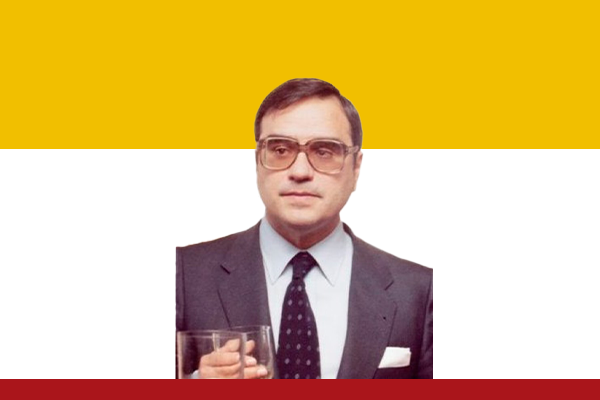
Mr. Rodolfo Martín Villa
In Office: 1 December 1981 – 28 July 1982
Political Party: Union of the Democratic Centre
Home State: Santa María del Páramo
Lifespan: born 1934
Country: Spain
Image credits available here.
Early Life and Political Roots
Rodolfo Martín Villa was born on October 3, 1934, in Santa María del Páramo, León, Spain. He grew up during the Francoist era, where politics were tightly controlled by the regime. Martín Villa studied engineering at the Technical University of Madrid and later joined the Falange Española Tradicionalista y de las JONS, the only legal political organization under Franco. His early engagement with the system allowed him to understand its workings deeply, which later helped him manage the complexities of Spain’s political transformation.
Role in the Late Franco Era
During the late years of Francisco Franco’s dictatorship, Martín Villa rose through the administrative ranks. He served as the Civil Governor of Barcelona, where he gained recognition for his administrative efficiency and pragmatic approach. Instead of merely enforcing the regime’s rigid policies, he worked to improve governance and address the needs of the people. His leadership style combined discipline with an awareness of Spain’s need for modernization.
Contribution to Spain’s Democratic Transition
After Franco’s death in 1975, Spain faced the challenge of transitioning from dictatorship to democracy. Martín Villa emerged as a key figure in this critical period. He joined Prime Minister Adolfo Suárez’s government and became one of its most influential members. As Minister of Relations with the Cortes and later as Minister of the Interior, he actively helped dismantle authoritarian structures and introduce democratic reforms.
Martín Villa worked tirelessly to legalize political parties and facilitate free elections. He played a direct role in ensuring that Spain’s institutions evolved peacefully. Rather than resisting change, he embraced it and collaborated with both reformists and conservatives to build consensus. His ability to bridge opposing political camps helped maintain stability during a time of uncertainty.
Leadership as Deputy Prime Minister
As Deputy Prime Minister, Martín Villa strengthened his role as a stabilizing force in government. He oversaw domestic affairs, promoted economic modernization, and supported the adoption of the 1978 Constitution. His leadership was characterized by decisiveness and a pragmatic understanding of Spain’s social dynamics.
Martín Villa advocated for social dialogue and believed that cooperation among different political forces was essential for democratic progress. He managed labor conflicts through negotiation rather than repression, showing his commitment to democratic values. His ability to maintain order while fostering openness earned him respect across the political spectrum.
Challenges and Controversies
Despite his accomplishments, Martín Villa’s tenure was not free from controversy. His time as Minister of the Interior coincided with episodes of political violence, particularly during Spain’s turbulent transition years. Critics accused him of failing to prevent certain acts of police brutality, while supporters emphasized his efforts to balance security with reform. He faced legal scrutiny later in life, but he consistently defended his actions as necessary for Spain’s stability during a volatile period.
Legacy and Impact
Rodolfo Martín Villa’s legacy reflects the complexity of Spain’s path to democracy. He did not merely witness the transition; he directed it with courage and realism. His pragmatic approach ensured that Spain avoided the chaos that often accompanies regime change. Many historians regard him as one of the architects of modern Spain—a leader who combined firmness with flexibility and vision with restraint.
Even after leaving government office, Martín Villa continued to participate in political and business circles, offering his experience to future generations. His influence extended beyond his time in power, as he helped define Spain’s democratic identity.
Conclusion
Deputy Prime Minister Rodolfo Martín Villa played a decisive role in guiding Spain through one of the most delicate transitions in its history. By replacing repression with reform and control with consensus, he demonstrated how steady leadership could rebuild a nation’s political foundations. His active participation in every phase of Spain’s democratic evolution ensures his place among the country’s most consequential political figures.