Mr. Itamar Franco
In Office: 29 December 1992 – 1 January 1995
Political Party: Unaffiliated
Home State: Rio de Janeiro
Lifespan: 1930–2011
Country: Brazil
Image credits available here.
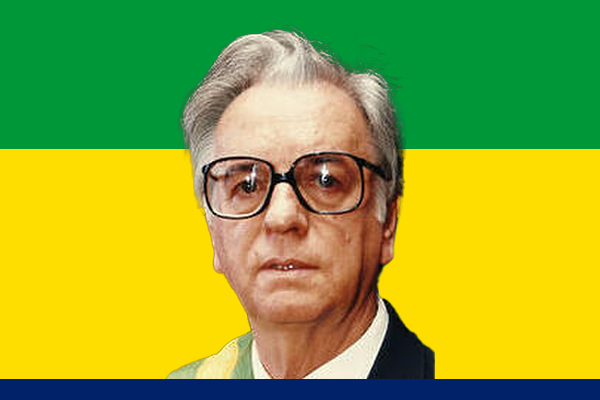
Early Life and Political Beginnings
Itamar Augusto Cautiero Franco was born on June 28, 1930, in Salvador, Bahia, Brazil. He spent his early years in Juiz de Fora, Minas Gerais, where he pursued his education and developed an interest in public service. Franco studied civil engineering at the Federal University of Juiz de Fora, but politics soon captured his attention. He began his political journey as a member of the Brazilian Democratic Movement (MDB), a party that opposed the military dictatorship. Franco quickly rose through the ranks, winning respect for his honesty and independence.
As mayor of Juiz de Fora, he governed with transparency and accountability, earning the admiration of his constituents. His success at the municipal level inspired him to seek a broader platform, and he later became a senator representing Minas Gerais. Franco used his position to advocate for democratic reforms and economic justice, showing an unwavering commitment to Brazil’s development.
Vice Presidency and Rise to Power
In 1990, Franco became the running mate of Fernando Collor de Mello in Brazil’s presidential election. The duo won, and Franco assumed office as Vice President in 1990. He supported Collor’s efforts to modernize Brazil’s economy but often disagreed with some of his aggressive economic policies. When corruption scandals engulfed President Collor in 1992, the political atmosphere in Brazil turned chaotic.
Rather than remain silent, Franco took a firm stance for integrity. As Collor faced impeachment, Franco prepared to assume leadership with dignity and responsibility. When Congress removed Collor from office in December 1992, Franco became the President of Brazil. He immediately pledged to restore stability, credibility, and public confidence in government institutions.
Leadership and Economic Reforms
As President, Itamar Franco faced immense challenges. Brazil was struggling with hyperinflation, social inequality, and political distrust. Franco acted decisively to bring together a competent team to design effective solutions. He appointed Fernando Henrique Cardoso as his Finance Minister, entrusting him with the crucial task of stabilizing the economy.
Under Franco’s leadership, the government launched the Plano Real (Real Plan) in 1994, a bold economic program that curbed inflation and restored economic stability. Franco actively supported the plan, emphasizing national unity and financial discipline. His administration reduced inflation rates dramatically, revived investor confidence, and improved living conditions for millions of Brazilians.
Franco also prioritized democracy and national sovereignty. He strengthened civil institutions, supported media freedom, and promoted social programs that uplifted the poor. While many leaders sought popularity, Franco focused on honest governance and long-term national growth. His pragmatic and ethical leadership style helped Brazil recover from a period of corruption and disillusionment.
Legacy and Later Years
When Franco’s term ended in 1995, he left behind a stronger, more stable Brazil. The Real Plan became a lasting achievement, forming the foundation for future economic progress. Franco continued to serve his nation, later becoming a senator and even governor of Minas Gerais. Throughout his career, he remained a symbol of integrity and nationalism.
Franco often criticized policies he believed harmed Brazil’s sovereignty or social balance. He valued independence and fairness above political convenience. Even after his presidency, he inspired a generation of leaders to pursue politics as a noble service rather than a tool for personal gain.
Itamar Franco passed away on July 2, 2011, leaving a legacy of honesty, reform, and dedication. His name continues to evoke respect across Brazil’s political spectrum.
Conclusion
President Itamar Franco guided Brazil through one of its most delicate transitions with wisdom and integrity. By championing economic reforms, defending democracy, and upholding transparency, he proved that principled leadership can stabilize a nation in crisis. Franco’s presidency remains a defining chapter in Brazil’s democratic history, marked by courage, resilience, and the pursuit of national unity.