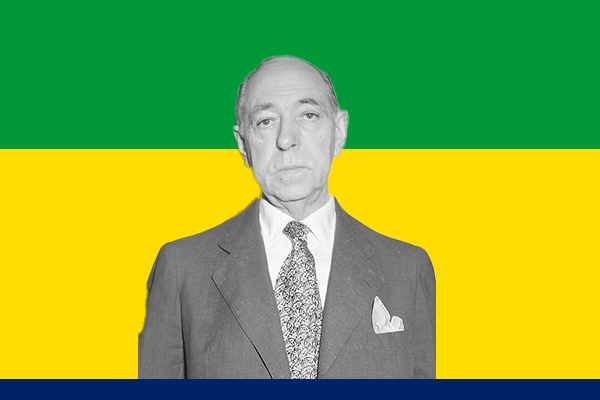
Early Life and Education
Nereu de Oliveira Ramos was born on September 3, 1888, in Lages, Santa Catarina, Brazil. He grew up in a family deeply rooted in public service, which influenced his future political career. He pursued his education in law at the Faculty of Law of São Paulo, where he developed strong ideals of justice and civic duty. Ramos embraced politics early, motivated by a vision to modernize Brazil’s administrative system and strengthen its democratic institutions.
Rise in Political Career
Ramos began his political journey by serving in the Legislative Assembly of Santa Catarina. His eloquence and firm decision-making impressed his peers, and he quickly rose through the ranks. As governor of Santa Catarina, he introduced reforms that improved education, infrastructure, and governance. He focused on creating a more efficient public administration and empowered local leaders to participate in decision-making processes.
In national politics, Ramos gained prominence as a senator and became known for his dedication to constitutional order. He defended democracy during turbulent times and took strong stances on issues affecting Brazil’s unity. His reliability and political wisdom earned him recognition within the Brazilian Labour Party (PTB), where he worked to strengthen the relationship between the federal government and the states.
Vice Presidency and National Leadership
In 1956, Nereu Ramos assumed the office of Vice President of Brazil. He carried out his responsibilities with diligence and integrity, maintaining open communication with the president and other government officials. Ramos took an active role in policy formulation, especially in administrative reforms and education. He encouraged collaboration between different branches of government to ensure efficient governance.
When Brazil faced political uncertainty after the death of President Getúlio Vargas and the resignation of President Café Filho, Ramos stepped forward to maintain constitutional continuity. As Vice President, he demonstrated calm leadership and took decisive actions to stabilize the country. He upheld the rule of law, promoted democratic procedures, and worked to protect the rights of Brazilian citizens during challenging times.
Presidency and Commitment to Democracy
In 1955, when a constitutional crisis threatened Brazil’s democratic order, Congress appointed Nereu Ramos as interim President. He accepted the role with a strong sense of responsibility and acted swiftly to restore national stability. Ramos ordered security forces to protect democratic institutions and ensured that the transition of power to President-elect Juscelino Kubitschek occurred smoothly.
His brief presidency reflected his unwavering belief in democracy. He resisted pressures from groups seeking to disrupt the political process and focused on safeguarding constitutional governance. His actions reinforced Brazil’s democratic resilience and set an example for future leaders.
Legacy and Influence
Nereu Ramos left an enduring mark on Brazil’s political history. His leadership reflected courage, balance, and a deep understanding of national unity. As Vice President and later as President, he prioritized democracy over personal ambition and always placed the country’s interests above political disputes.
Ramos also influenced future generations of politicians through his example of ethical leadership. His life emphasized that stability in governance requires firm principles and unwavering commitment to justice. He inspired respect across political divisions for his integrity and statesmanship.
Tragically, Nereu Ramos died in an airplane crash on June 16, 1958, but his vision for a democratic Brazil continued to guide the nation’s leaders. His contributions to governance and constitutional order remain a significant chapter in Brazil’s political evolution.
Conclusion
Vice President Nereu Ramos exemplified the strength of character and devotion that Brazil needed during its moments of crisis. He acted with integrity, defended democracy, and steered the nation toward stability. His leadership demonstrated that true statesmanship lies in service, not ambition, and his legacy continues to inspire commitment to justice and national unity in Brazilian politics.