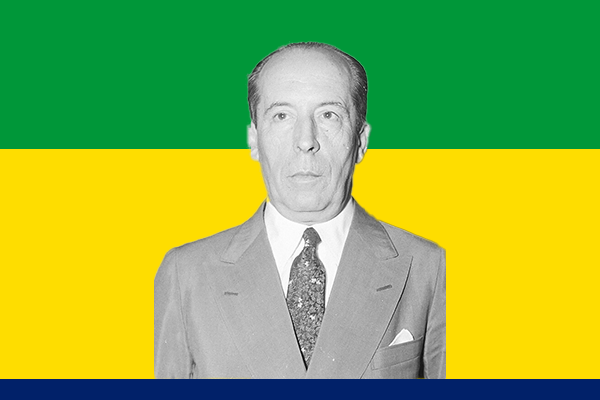
Early Life and Political Beginnings
José Maria Alkmin was born on June 11, 1901, in Bocaiúva, Minas Gerais, Brazil. He grew up in a modest family that valued education and public service. Alkmin pursued his studies with determination and graduated in law, which laid the foundation for his political career. From an early age, he showed great interest in politics and governance, actively engaging in discussions about Brazil’s development and future. His passion for public service guided his path into political life.
As a young lawyer, Alkmin used his knowledge to serve his community and advocate for justice. His sincerity and eloquence quickly earned him respect among his peers. He entered politics through the Minas Gerais state assembly, where he worked to improve local administration and rural development.
Rise to National Prominence
Alkmin advanced to the national stage by joining the Chamber of Deputies, where he actively participated in shaping important laws and policies. He became known for his balanced approach and dedication to democratic values. Through his speeches and actions, Alkmin emphasized economic stability, education, and infrastructure development.
His pragmatic leadership style attracted the attention of national leaders, who appreciated his focus on consensus and progress. Alkmin often mediated between opposing political forces, ensuring that national interests remained above partisan conflicts. His deep understanding of Brazil’s socio-economic challenges made him a valuable figure in the country’s evolving democracy.
Vice Presidency under Castelo Branco
In 1964, José Maria Alkmin became Vice President of Brazil under President Humberto de Alencar Castelo Branco. During this period, Brazil faced political turbulence following the military coup that reshaped its governance. Alkmin played a vital role in maintaining political stability and guiding the transition toward a structured administration.
As Vice President, he supported initiatives aimed at modernizing Brazil’s economy and improving public institutions. He collaborated closely with President Castelo Branco to implement reforms that encouraged industrial growth and fiscal responsibility. Alkmin used his diplomatic skills to strengthen relations between government sectors, ensuring that decisions were made in the country’s best interest.
He also represented Brazil in international forums, where he promoted national unity and defended Brazil’s sovereignty. Alkmin’s calm demeanor and intellectual insight helped reduce tensions during a challenging political period.
Legacy of Service and Integrity
After completing his term as Vice President, Alkmin continued serving Brazil in various capacities. He remained active in political and academic circles, sharing his experience with younger generations. Throughout his life, he valued education, ethics, and dialogue as essential elements of leadership.
Alkmin’s contributions extended beyond politics. He inspired respect for public responsibility and national development. Many leaders who followed him admired his ability to balance firmness with compassion. Even after his death in 1974, his legacy continued to influence Brazilian politics and governance.
Conclusion
Vice President José Maria Alkmin stands as a symbol of dedication, wisdom, and patriotism. He worked tirelessly to strengthen Brazil’s institutions and uphold democratic values during times of uncertainty. His life reflected a clear commitment to serving the people and promoting unity.
Through his vision and leadership, Alkmin left a lasting mark on Brazilian history. His efforts to modernize governance, support education, and promote integrity continue to inspire future generations. His name remains associated with honor, balance, and a deep love for his country.