Mr. Augusto Rademaker
In Office: 30 October 1969 – 15 March 1974
Political Party: National Renewal Alliance
Home State: Rio de Janeiro
Lifespan: 1905–1985
Country: Brazil
Image credits available here.
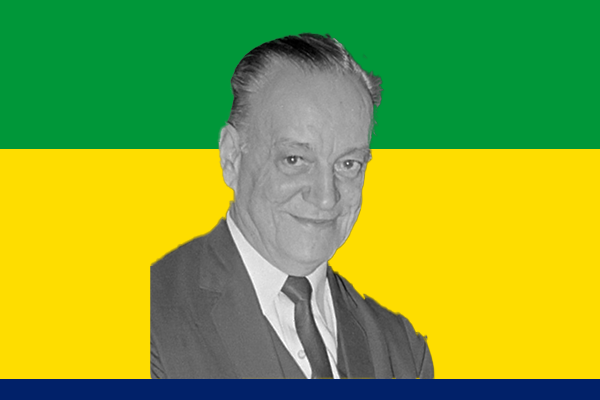
Early Life and Naval Career
Augusto Hamann Rademaker Grünewald was born on November 11, 1905, in Rio de Janeiro, Brazil. From a young age, he showed a strong interest in the sea and discipline, which led him to pursue a career in the Brazilian Navy. He entered the Naval School and quickly distinguished himself through intelligence, precision, and leadership. Rademaker advanced through the ranks by commanding ships, participating in military missions, and dedicating himself to strengthening Brazil’s naval power.
As an officer, he promoted modernization within the Navy and encouraged the adoption of new technologies. His strategic vision helped shape the Brazilian naval force during the mid-twentieth century, positioning it as a vital arm of national defense.
Role During the Military Regime
When Brazil entered a period of military rule after the 1964 coup, Rademaker became a key supporter of the new regime. His loyalty to the Armed Forces and his belief in preserving order and stability aligned with the government’s objectives. The administration appointed him to significant posts, including the Ministry of the Navy, where he implemented reforms that reinforced military discipline and efficiency.
Rademaker also played a role in coordinating security policies and supporting Brazil’s alignment with Western powers during the Cold War. His approach emphasized control, national unity, and the maintenance of internal peace through military oversight.
Vice Presidency and Political Influence
In 1969, after the illness of President Artur da Costa e Silva, a military junta composed of Rademaker, General Aurélio de Lira Tavares, and Brigadier Márcio de Souza e Melo assumed power temporarily. The junta managed the country during a delicate political transition and made decisions that maintained the authority of the military government.
Soon after, Rademaker became Vice President under President Emílio Garrastazu Médici, serving from 1969 to 1974. During his vice presidency, he supported Médici’s policies that focused on economic growth and national security. Rademaker worked to maintain coordination between the Armed Forces and the executive branch, ensuring unity within the administration.
He participated actively in discussions on foreign relations, defense strategies, and internal security measures. By promoting stability and efficiency in governance, Rademaker helped sustain Brazil’s “economic miracle,” a period marked by rapid industrial expansion and infrastructure development.
Legacy and Later Life
After completing his term, Rademaker retired from active political life but continued to represent the values of duty, discipline, and patriotism that characterized his career. His leadership left a lasting impression on Brazil’s military and political institutions. Many contemporaries recognized him as a figure of integrity who remained committed to his nation’s sovereignty and order.
Although historians debate the consequences of the military regime, they acknowledge Rademaker’s significant influence in maintaining government cohesion and enforcing a sense of national purpose. He passed away on September 13, 1985, leaving behind a complex legacy intertwined with one of the most controversial periods in Brazilian history.
Conclusion
Vice President Augusto Rademaker played a decisive role in shaping Brazil’s modern military and political identity. Through his naval expertise, administrative discipline, and commitment to national unity, he influenced the direction of the country during times of transformation. His career reflected the ideals of a soldier dedicated to service, order, and progress. While his era remains debated, his contributions continue to represent a key chapter in Brazil’s history of leadership and governance.