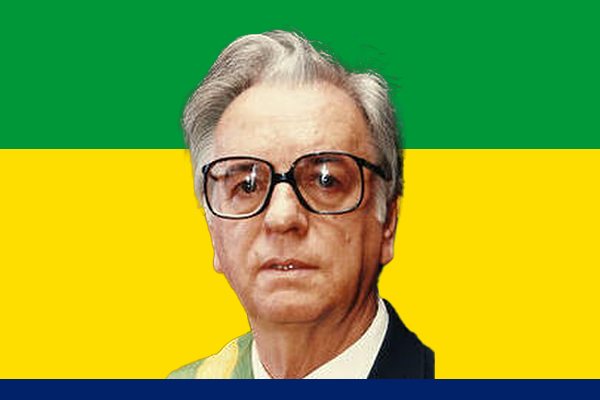
Early Life and Education
Itamar Franco was born on June 28, 1930, in Salvador, Bahia, Brazil. He spent his early years in Juiz de Fora, Minas Gerais, where he built a reputation for academic excellence and civic engagement. He studied civil engineering at the Federal University of Juiz de Fora and graduated with a strong interest in public service. Franco used his technical and analytical skills to shape his political career, which began at the local level and gradually expanded into national politics.
Entry into Politics
Itamar Franco entered politics with determination and a commitment to serve the public. He joined the Brazilian Labour Party and later became affiliated with the Brazilian Democratic Movement (MDB), a key opposition force during Brazil’s military regime. Franco won election as mayor of Juiz de Fora, where he focused on infrastructure development and administrative transparency. His practical leadership style and emphasis on efficient governance helped him gain national attention.
Franco’s successful local leadership inspired him to seek higher offices. He was elected as a senator for Minas Gerais and used his position to advocate for democratic reforms and economic modernization. His consistent defense of social justice and democratic principles earned him widespread respect across party lines.
Vice Presidency under Fernando Collor
In 1989, Itamar Franco ran as the vice-presidential candidate alongside Fernando Collor de Mello in Brazil’s first democratic presidential election after decades of military rule. The duo won, and Franco assumed office as Vice President in 1990. During his tenure, he maintained a strong sense of independence and did not hesitate to question government policies he found ineffective or unjust.
When President Collor’s administration faced accusations of corruption, Franco distanced himself from the scandal and preserved his reputation for honesty and integrity. His cautious yet firm approach during the political crisis demonstrated his commitment to ethical governance.
Presidency and Economic Stabilization
In 1992, following Collor’s impeachment, Itamar Franco became the President of Brazil. He immediately took charge of restoring public trust in government institutions and stabilizing a nation that was facing political turmoil and economic instability. Franco appointed a capable team of ministers and encouraged collaboration among diverse political groups.
He gave strong support to the Real Plan, an economic program designed to control hyperinflation and strengthen Brazil’s currency. Under his leadership, the plan succeeded, and Brazil entered a period of economic recovery. Franco’s pragmatic and balanced decisions helped create the foundation for long-term economic stability.
Leadership Style and Legacy
Itamar Franco led with independence, modesty, and a deep sense of national responsibility. He avoided populist measures and focused on sustainable policies that benefited Brazil’s long-term interests. Franco often prioritized consensus-building and sought unity among Brazil’s political factions.
After completing his term, Franco continued his political career as a senator and later as governor of Minas Gerais. He remained active in defending democratic values and economic transparency. His career reflected a rare combination of technical expertise, political insight, and moral integrity.
Conclusion
Vice President Itamar Franco played a defining role in Brazil’s transition from political instability to democratic consolidation. His tenure marked a period of renewal and economic progress. Franco’s leadership demonstrated how honesty, independence, and practical decision-making can guide a nation through crisis and toward stability. His contributions continue to inspire Brazilian politics and serve as a reminder of the power of principled leadership.