VIETNAM
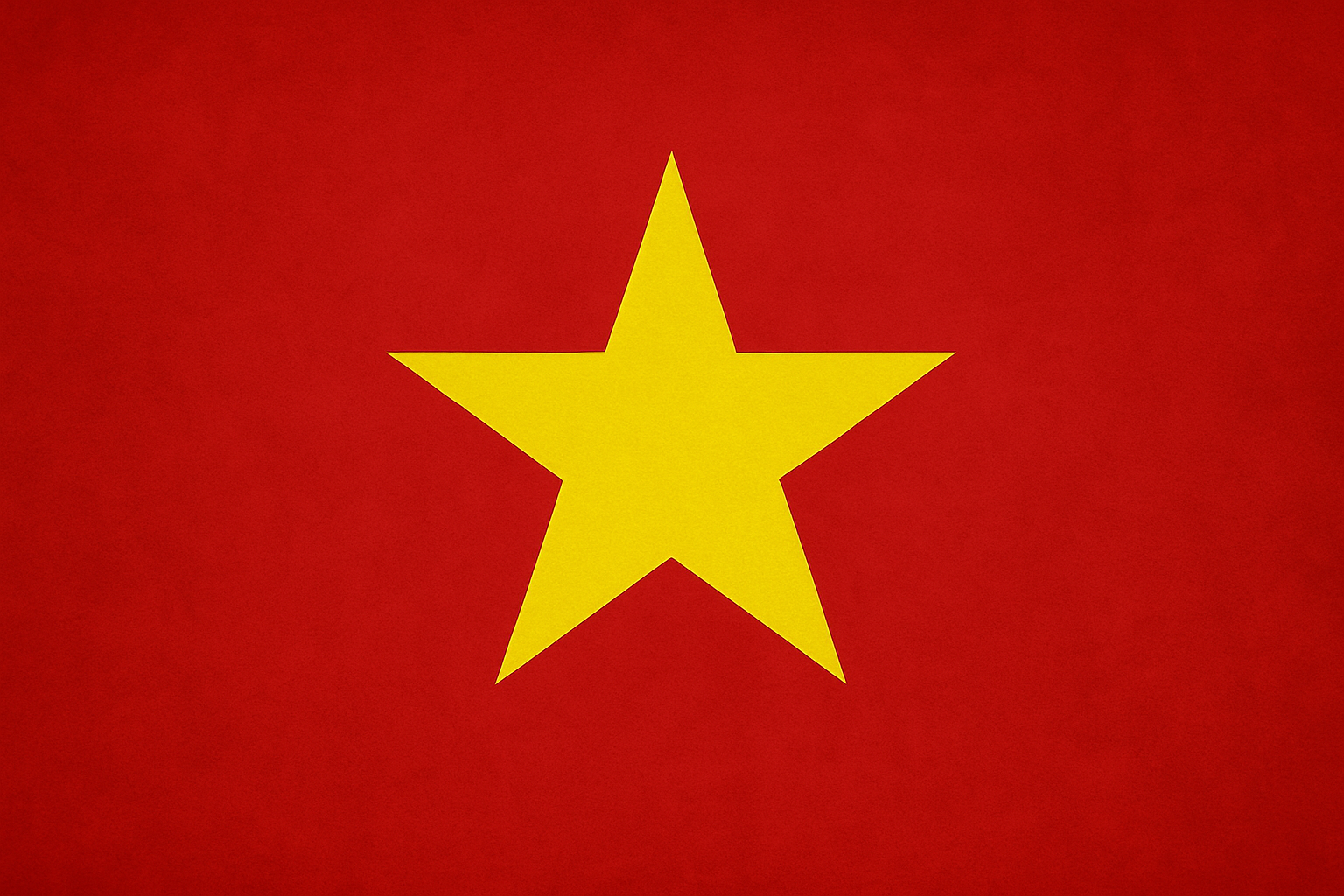
Vietnam Flag
The flag of Vietnam features a bright red background with a large five-pointed yellow star at its center. The red symbolizes the nation’s revolutionary spirit and the sacrifices made for independence. The yellow star represents the unity of Vietnam’s people, with each point standing for workers, peasants, soldiers, intellectuals, and youth. Simple yet powerful, the flag reflects Vietnam’s identity, resilience, and commitment to national solidarity.
Vietnam: The Land of History, Culture, and Innovation
Vietnam stands as a vibrant nation shaped by centuries of history, rich culture, and rapid innovation. From the ancient heritage of Hanoi and Hue to the dynamic energy of Ho Chi Minh City, Vietnam blends tradition with modern progress. Its landscapes range from terraced rice fields in the north to sunny beaches in the south. Vietnamese culture celebrates community, cuisine, and resilience, reflected in iconic dishes like pho and banh mi. Today, Vietnam grows as a technological and economic hub, attracting global investment while preserving its unique identity and enduring spirit.
Vietnam – A Nation of Heritage, Resilience, and Rapid Progress
Vietnam stands as one of Southeast Asia’s most dynamic countries, blending ancient traditions with fast-paced modern development. Located along the eastern coast of the Indochinese Peninsula, the nation stretches from the Red River Delta in the north to the fertile Mekong Delta in the south. Over centuries, Vietnam developed a distinct cultural identity shaped by its indigenous roots, periods of Chinese influence, and long struggles for independence.
The Vietnamese people take immense pride in their history of resilience. For nearly a thousand years, various dynasties defended the land against foreign domination while nurturing Confucian scholarship, agriculture, and architecture. The Nguyễn, Lê, and Trần dynasties left a legacy of citadels, royal tombs, and traditional arts that still define the cultural landscape today. Vietnam’s history also includes its determined fight for independence in the 20th century, a struggle that shaped its national consciousness and strengthened its sense of unity.
In the modern era, Vietnam has transformed into a rapidly developing economy. Since the Đổi Mới reforms of 1986, the country has shifted from a centralized economy to a market-oriented model. This transition opened the door to foreign investment, industrial expansion, and export growth. Today, Vietnam is known for its thriving manufacturing sector, especially in electronics, textiles, and technology. Major global companies operate factories in cities like Ho Chi Minh City, Hanoi, and Da Nang, turning the country into a key international production hub.
Tourism also plays a significant role in Vietnam’s growth. Visitors flock to Ha Long Bay’s limestone pillars, Hội An’s ancient streets, Huế’s imperial citadel, and the terraced rice fields of Sa Pa. The nation’s rich cuisine — from phở and bánh mì to fresh seafood — highlights its cultural diversity and regional flavors.
Despite its rapid development, Vietnam continues to preserve its traditions. Family values, community festivals, and ancestral rituals remain central to everyday life. As the country invests in education, technology, and green growth, it looks toward a future that balances innovation with cultural continuity.
Vietnam today symbolizes resilience, cultural richness, and economic ambition — a nation proudly rooted in its past while confidently moving forward.