ISRAEL
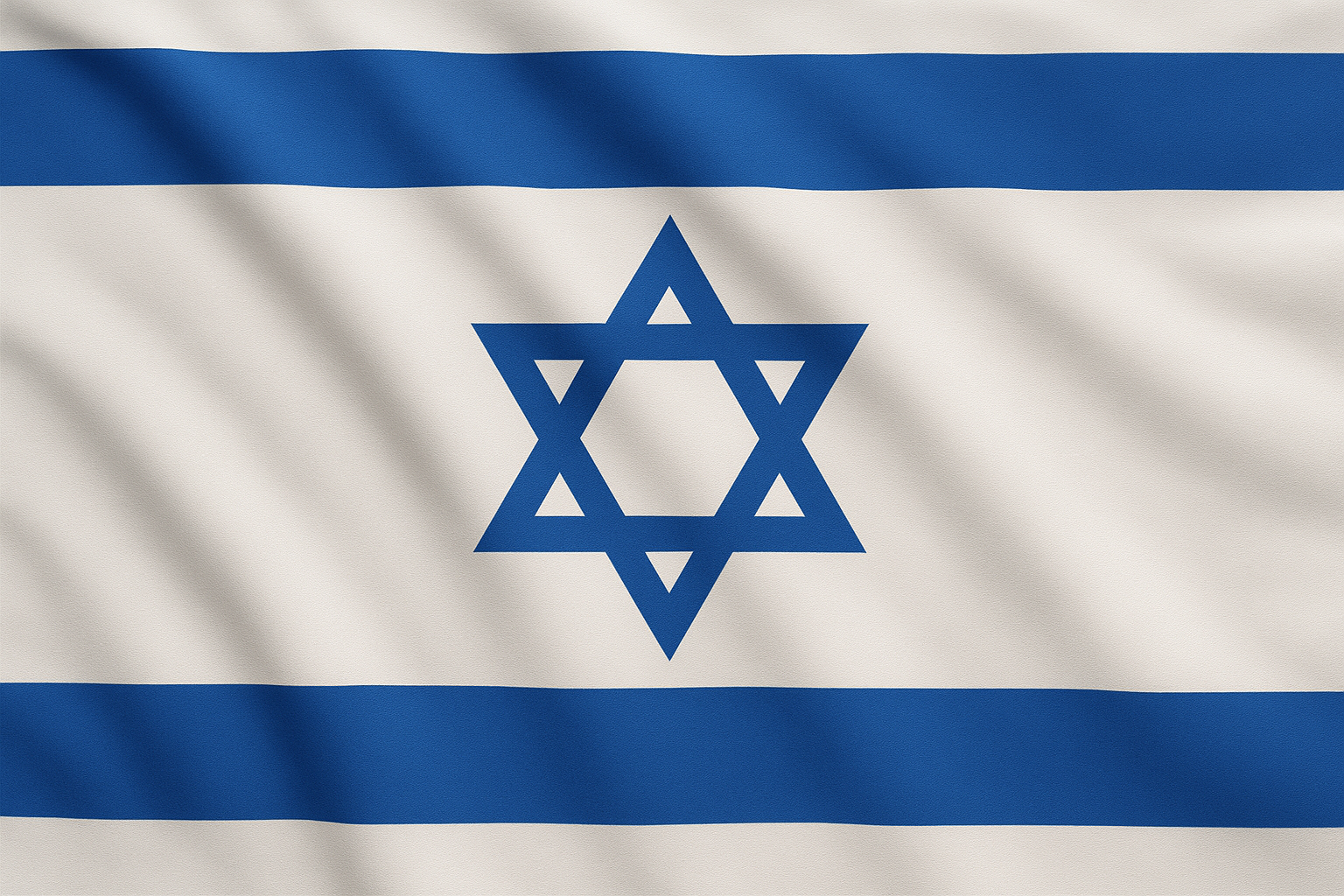
Israel Flag
The flag of Israel features a white background with two horizontal blue stripes near the top and bottom edges. At the center sits the blue Star of David, a powerful symbol of Jewish identity and heritage. Inspired by the traditional Jewish prayer shawl, the tallit, the flag represents spirituality, unity, and national pride. Adopted in 1948, it embodies the nation’s history, cultural roots, and enduring connection to Jewish traditions and the land of Israel.
Overview
Israel: A Land of History, Innovation, and Complexity
Israel stands as one of the world’s most dynamic and historically significant nations, blending ancient heritage with remarkable modern achievements. Located in the Middle East, on the eastern shore of the Mediterranean Sea, the country occupies a small geographic area but holds immense cultural, religious, and geopolitical importance. Its landscape includes fertile valleys, desert regions, coastal plains, and the unique waters of the Dead Sea.
Historical and Cultural Roots
Israel’s history stretches back thousands of years and forms a central foundation for Judaism, Christianity, and Islam. Jerusalem, one of the oldest cities on Earth, remains a spiritual center for millions. Over centuries, the land witnessed the rise and fall of kingdoms, periods of exile, and waves of migration. In 1948, Israel declared its independence, marking the birth of the modern state. This event reshaped global politics and led to both cooperation and conflict with neighboring nations.
A Diverse Society
Modern Israel reflects an extraordinary blend of cultures. Jewish communities from Europe, Asia, Africa, and the Americas brought diverse traditions, languages, and cuisines. Arab citizens, including Muslims, Christians, and Druze, add further richness to the social fabric. Hebrew and Arabic serve as official languages, and the country’s multicultural character influences everything from festivals and food to music and daily life.
Innovation and Economic Growth
Despite limited natural resources, Israel built a powerful economy driven by ingenuity and technology. Known as the “Start-Up Nation,” it leads in fields such as cybersecurity, medicine, agriculture, and artificial intelligence. Breakthroughs like drip irrigation revolutionized farming worldwide, while Israeli tech companies continue to influence global markets. Strong universities, research centers, and military-trained professionals fuel this innovative environment.
Political Landscape and Governance
Israel operates as a parliamentary democracy. The Knesset, its legislative body, represents a wide spectrum of political views. Governments often form through coalition agreements among multiple parties, reflecting the country’s vibrant but complex political scene. Debates on security, religion, and social issues shape national policy and public discourse.
Regional Importance and Ongoing Challenges
Israel’s position in the Middle East places it at the center of significant geopolitical developments. The Israeli-Palestinian conflict remains one of the world’s most sensitive and long-standing disputes, involving questions of statehood, borders, and rights. Periods of tension and negotiation continue to influence the region’s stability. At the same time, Israel has expanded diplomatic ties with several countries, opening new opportunities for cooperation.
A Nation Balancing Tradition and Progress
Israel today represents a blend of ancient legacy and modern ambition. Its people preserve deep cultural and religious traditions while driving forward scientific advancement and economic growth. This balance of history, diversity, innovation, and challenge defines Israel’s unique identity on the global stage.