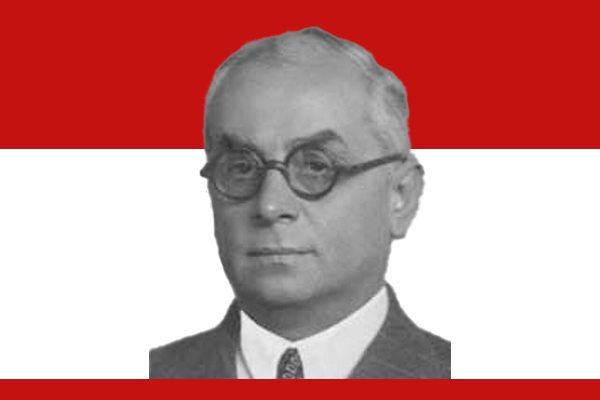
Early Life and Rise in Politics
Mahmut Celâl Bayar was born on 16 May 1883 in the Ottoman Empire. He grew up in a family that valued education, so he pursued learning from an early age. As a young man, he developed a strong interest in public affairs and quickly entered political life. He joined the Committee of Union and Progress (CUP), where he gained administrative experience and expanded his political network.
During the final years of the Ottoman Empire, Bayar actively worked in economic and administrative roles. He contributed to banking reforms and supported modernization policies. His strong involvement in public administration helped him develop the skills he later used in the new Turkish Republic.
Role in the Foundation of the Republic
After the collapse of the Ottoman Empire, Bayar joined the Turkish War of Independence. He supported Mustafa Kemal Atatürk and took part in organizing resistance movements. As the new Republic emerged, Bayar accepted important economic and political responsibilities. Atatürk appointed him as Minister of Economy, where he implemented policies to stabilize and grow the young republic’s economy.
Bayar also helped shape Turkey’s early state-led industrialization program. He promoted national banks, encouraged industrial ventures, and strengthened the country’s financial foundations. His economic vision played a key role in Turkey’s modernization.
Prime Minister and Formation of the Democrat Party
In 1937, Atatürk selected Bayar as Prime Minister. Bayar actively worked to carry out Atatürk’s economic and modernization reforms. His tenure was short, ending in 1939, but he used this period to strengthen his leadership reputation.
After World War II, Bayar took a leading role in the movement toward multi-party democracy. In 1946, he co-founded the Democrat Party (DP) along with Adnan Menderes. Bayar became the party’s first chairman and guided its rise as a major political force. He campaigned for greater political freedoms, a more open economy, and reduced state control. His leadership helped the DP win public support across the country.
Presidency and Democratic Transformation
In 1950, the Democrat Party won a decisive victory in Turkey’s first truly free elections. The Grand National Assembly elected Mahmut Celâl Bayar as the third President of Turkey. As president, he encouraged political liberalization, expanded democratic participation, and supported economic reforms. He backed Prime Minister Adnan Menderes as the government pursued ambitious development projects, improved infrastructure, and strengthened ties with Western nations.
Bayar played an active role in guiding the vision of a more open and prosperous Turkey. Under his presidency, the country joined NATO in 1952 and expanded its international presence.
Downfall and Later Years
Political tensions grew in the late 1950s, leading to unrest and polarization. In 1960, a military coup overthrew the Democrat Party government. Authorities arrested Bayar and put him on trial along with other DP leaders. The court sentenced him to death, but the ruling was later changed to life imprisonment due to his age.
In 1964, the government released Bayar on medical grounds. He spent his later years writing, advising political figures, and reflecting on his long career. He lived until 1986, becoming one of the longest-lived statesmen in Turkish history.
Conclusion
Mahmut Celâl Bayar shaped Turkey’s economic and political landscape during a time of profound transformation. Through his active leadership, he contributed to the birth of multi-party democracy and played a central role in the modernization of the Republic. His legacy continues to hold an important place in Turkey’s historical and political narrative.