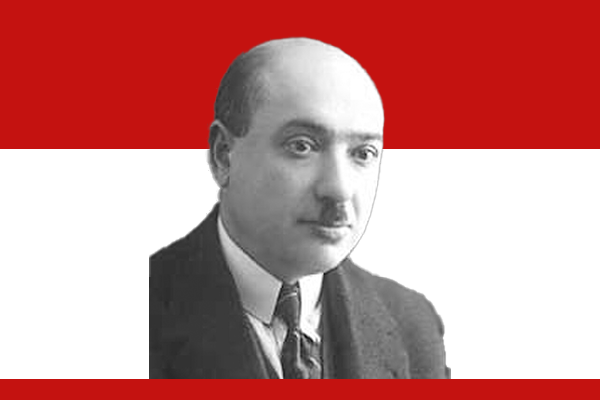
Early Life and Academic Background
Şemsettin Günaltay was born in 1883 in Erzincan, then part of the Ottoman Empire. He pursued higher education in theology and philosophy, fields that later defined his intellectual identity. Günaltay established himself as a respected academic and historian before entering full-time politics. He wrote extensively on Islamic history, Turkish culture, and philosophy, earning recognition as a serious scholar.
His academic background strongly influenced his political outlook. Rather than separating knowledge from governance, Günaltay actively applied scholarly reasoning to public affairs. He believed that education and intellectual discipline could strengthen the Turkish state and society.
Entry into Politics
Günaltay entered politics as a member of the Republican People’s Party (CHP). He served as a parliamentarian for several terms and gained experience in legislative affairs. During this period, he built a reputation as a moderate thinker who respected secular principles while understanding the religious and cultural sentiments of the population.
Unlike many career politicians, Günaltay approached politics with a reflective and analytical mindset. He actively contributed to debates on national identity, secularism, and modernization, which prepared him for executive leadership.
Becoming Prime Minister
In January 1949, Şemsettin Günaltay became Prime Minister under President İsmet İnönü. Turkey faced growing demands for political pluralism, and opposition parties were gaining public support. Günaltay accepted leadership at a moment when the ruling party needed reform-oriented credibility.
As Prime Minister, he focused on stabilizing the government while responding to calls for greater democratic participation. He worked to reduce political tension and encouraged a more open political climate.
Policies and Governance
Günaltay actively supported democratic reforms that allowed opposition voices more space in the political system. His government eased restrictions on religious expression, including limited reforms related to religious education, while maintaining the secular framework of the republic. Through this balanced approach, he aimed to reconcile state principles with public expectations.
He also addressed economic and social challenges by supporting infrastructure development and administrative efficiency. Although his tenure was relatively short, he emphasized institutional stability and political moderation.
Role in Democratic Transition
One of Günaltay’s most significant contributions involved preparing Turkey for the 1950 general elections. These elections later resulted in a peaceful transfer of power, a historic milestone in Turkish democracy. Günaltay respected electoral competition and refrained from suppressing opposition forces, setting an example of political responsibility.
His leadership helped normalize the idea that power could change hands through democratic means rather than political pressure.
Later Life and Legacy
After leaving office, Günaltay returned to intellectual and academic pursuits. He continued writing and contributing to public discourse until his death in 1961. Historians remember him as a bridge between intellectual scholarship and political leadership.
Şemsettin Günaltay’s legacy rests on his commitment to moderation, democracy, and thoughtful governance. He demonstrated that political authority could coexist with academic integrity and respect for societal diversity.
Conclusion
Prime Minister Şemsettin Günaltay guided Turkey through a sensitive transitional period with restraint and intellect. By actively promoting democratic norms and balanced reform, he left a lasting imprint on Turkey’s political evolution. His life remains a strong example of how scholarship and leadership can work together in public service.