Mr. Fahd
In Office: 25 March 1975 – 21 February 1996
Political Party: League of Arab States
Home State: Kuwait
Lifespan: 1923 – 2005
Country: Saudi Arabia
Image credits available here.
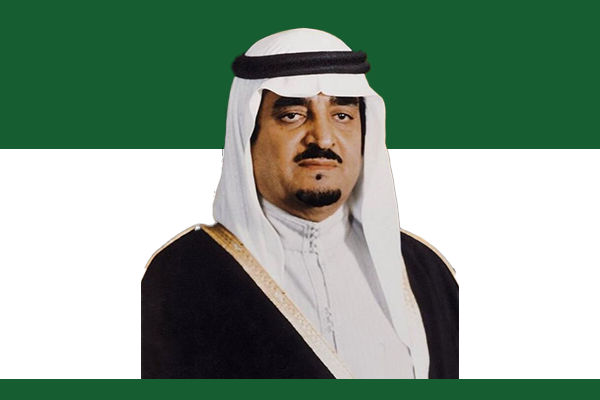
Early Life and Political Rise
Fahd bin Abdulaziz was born in 1921 in Riyadh into the influential House of Saud. From an early age, he received education in Islamic studies, politics, and administration. He quickly emerged as a capable leader among his brothers. Fahd entered public service at a young age and gained experience by representing Saudi Arabia in international forums. These early responsibilities prepared him for higher leadership roles and strengthened his understanding of global diplomacy.
Becoming Prime Minister and King
In 1982, Fahd assumed power as King of Saudi Arabia and automatically took the role of Prime Minister. He immediately focused on strengthening state institutions and improving governance. Fahd exercised firm authority while maintaining unity within the royal family. His leadership style emphasized stability, consultation, and long-term planning. Under his direction, Saudi Arabia consolidated its political system and reinforced its position as a leading power in the Arab and Islamic worlds.
Administrative and Economic Reforms
Prime Minister Fahd actively promoted administrative reforms to modernize the Saudi government. He expanded ministries, improved public administration, and encouraged professional management. Fahd also prioritized economic development by investing oil revenues into infrastructure, education, healthcare, and industry. Major cities experienced rapid growth, and the government expanded welfare programs for citizens. These policies improved living standards and strengthened the national economy.
Custodian of the Two Holy Mosques
One of Fahd’s most significant contributions was his adoption of the title “Custodian of the Two Holy Mosques.” He emphasized Saudi Arabia’s responsibility to protect and serve Islam’s holiest sites in Mecca and Medina. Fahd oversaw massive expansion projects at the Grand Mosque and the Prophet’s Mosque. These efforts improved safety, accessibility, and facilities for millions of pilgrims each year, reinforcing Saudi Arabia’s spiritual leadership in the Muslim world.
Foreign Policy and Regional Leadership
Prime Minister Fahd played a key role in shaping Saudi Arabia’s foreign policy. He promoted Arab unity and supported peaceful solutions to regional conflicts. Fahd strongly backed the Palestinian cause and proposed diplomatic initiatives aimed at resolving the Arab-Israeli conflict. During the Gulf War, he took decisive action to protect Saudi sovereignty and regional stability. His leadership during this crisis demonstrated strategic foresight and strengthened alliances with global partners.
Challenges and Health Issues
In the later years of his rule, Fahd faced health challenges that limited his public activities. Despite this, he ensured continuity in governance by delegating responsibilities while maintaining overall authority. His approach preserved political stability and prevented power struggles. Fahd’s leadership during this period reflected institutional strength and careful planning.
Legacy and Historical Significance
Prime Minister Fahd left behind a powerful legacy of modernization, stability, and religious stewardship. He transformed Saudi Arabia’s infrastructure, expanded its international role, and strengthened its Islamic identity. Fahd’s policies laid the foundation for future development and reforms. Historians remember him as a leader who balanced tradition with progress and guided Saudi Arabia through a period of profound change.