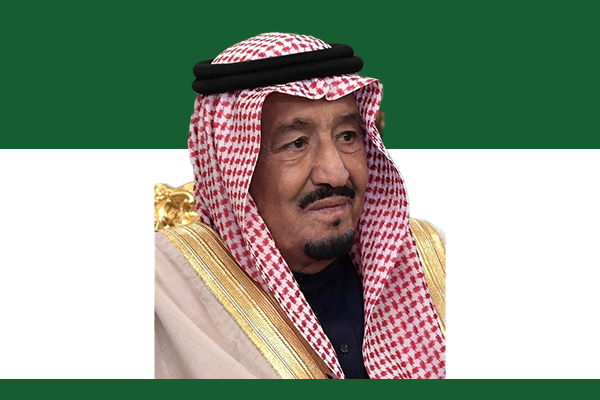
Salman
Reign: 23 January 2015 – present
Coronation: 23 January 2015
Home State: Riyadh
Lifespan: born – 1935
Country: Saudi Arabia
Image credits available here.
Early Life and Education
King Salman was born on December 31, 1935, in Riyadh, into the ruling Al Saud family. From an early age, he received education focused on Islamic studies, Arabic language, and governance. Senior scholars and experienced statesmen trained him, shaping his strong understanding of religion, administration, and diplomacy. These formative years prepared him for a lifetime of public service and leadership within the Kingdom.
Role as Governor of Riyadh
King Salman served as the Governor of Riyadh Province for nearly five decades, a role that defined his reputation as an effective administrator. During his tenure, he transformed Riyadh from a modest city into a modern capital with advanced infrastructure, education institutions, and healthcare systems. He directly supervised urban planning, development projects, and social initiatives. His hands-on leadership earned respect from citizens and officials alike and demonstrated his ability to balance tradition with modernization.
Rise to the Throne
After serving as Minister of Defense and Crown Prince, King Salman became the King of Saudi Arabia in 2015. He assumed leadership during a time of regional challenges and global economic changes. From the beginning of his reign, he emphasized national unity, institutional efficiency, and strategic decision-making. He also focused on strengthening state institutions to ensure long-term stability.
Governance and Administrative Reforms
King Salman actively restructured government institutions to improve efficiency and accountability. He supported administrative reforms that streamlined ministries and empowered capable leadership. Under his guidance, the Saudi government adopted a more coordinated approach to policymaking. He consistently reinforced the rule of law and strengthened the role of governance frameworks in national development.
Economic Vision and Development
One of King Salman’s most significant contributions lies in his support for economic transformation. He strongly backed Saudi Vision 2030, a comprehensive plan aimed at reducing dependence on oil and diversifying the economy. Under his leadership, Saudi Arabia invested heavily in infrastructure, technology, tourism, and renewable energy. These initiatives opened new opportunities for youth employment and private sector growth while enhancing global investor confidence.
Social and Cultural Progress
King Salman encouraged gradual social reforms while maintaining Saudi Arabia’s Islamic values. His leadership supported improvements in education, healthcare, and social welfare. He emphasized empowering future generations through knowledge, innovation, and skills development. Cultural heritage preservation also remained a priority, reflecting his respect for Saudi history and national identity.
Foreign Policy and Regional Influence
On the international stage, King Salman strengthened Saudi Arabia’s diplomatic presence. He actively promoted regional security, cooperation with global powers, and strategic partnerships. His foreign policy focused on protecting national interests, countering extremism, and maintaining stability in the Middle East. Through diplomacy and alliances, he reinforced Saudi Arabia’s role as a key global and regional actor.
Legacy and Impact
King Salman’s legacy reflects a leader who guided Saudi Arabia through transition with wisdom and resolve. He balanced continuity with change, ensuring that modernization aligned with cultural and religious foundations. His leadership has laid a strong foundation for future generations and positioned Saudi Arabia as a nation ready to face global challenges with confidence.