Mr. Kim Yong-nam
In Office: 5 September 1998 – 9 April 2009
Political Party: Workers’ Party of Korea
Home State: Pyongyang
Lifespan: 1928-2025
Country: North Korea
Image credits available here.
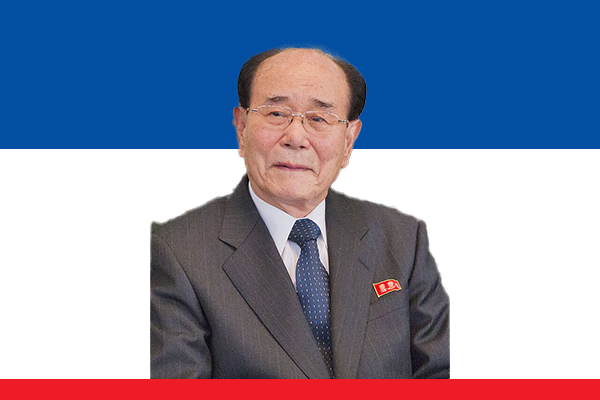
Early Life and Political Background
Kim Yong-nam was born in 1928 during a period when Korea was under Japanese colonial rule. His early life coincided with political upheaval, national liberation, and the eventual division of the Korean Peninsula. These historical events strongly influenced his ideological alignment with the socialist system established in North Korea.
He joined the Workers’ Party of Korea at a young age and steadily rose through the ranks. Kim Yong-nam developed a reputation as a disciplined party official with strong organizational skills and ideological commitment. Before becoming head of state, he served in several senior positions, including Foreign Minister of North Korea, which gave him extensive experience in international affairs.
Role as Head of State
In 1998, Kim Yong-nam was appointed President of the Presidium of the Supreme People’s Assembly. Under North Korea’s political system, this position made him the official Head of State, responsible for constitutional and ceremonial functions. Although he did not hold executive power, his role was vital in maintaining the formal structure of governance.
As head of state, Kim Yong-nam signed laws, ratified treaties, appointed ambassadors, and received foreign diplomats. He also represented North Korea at national celebrations, official ceremonies, and state funerals. His calm demeanor and deep knowledge of protocol made him a trusted figure in these roles.
International Representation and Diplomacy
One of Kim Yong-nam’s most significant contributions was his role in international diplomacy. He traveled widely, meeting heads of state and government leaders across Asia, Africa, Europe, and Latin America. These visits helped North Korea maintain diplomatic relations despite international isolation and sanctions.
Kim Yong-nam represented North Korea at major international events, including the Olympic Games and state anniversaries of friendly nations. Through these appearances, he projected an image of continuity, stability, and legitimacy for the North Korean state on the global stage.
Relationship with the Supreme Leadership
Kim Yong-nam served under three North Korean leaders: Kim Il-sung, Kim Jong-il, and Kim Jong-un. His long tenure reflected deep trust from the ruling Kim family. He consistently demonstrated loyalty to the leadership and the ideology of the state, which was essential for maintaining his high-ranking position.
Despite holding the title of head of state, Kim Yong-nam never challenged the authority of the supreme leader. Instead, he functioned as a senior statesman who reinforced the centralized power structure of North Korea.
Retirement and Legacy
In 2019, Kim Yong-nam retired from his position after more than 20 years as head of state. His retirement marked the end of an era in North Korean ceremonial politics. He passed away in 2022, leaving behind a legacy defined by longevity, discipline, and service to the state.
Kim Yong-nam’s legacy lies in his role as the face of North Korea to the outside world. While not a policymaker, he played an essential part in sustaining diplomatic channels and upholding the formal institutions of the country.
Conclusion
Kim Yong-nam remains a significant figure in North Korean political history. As a long-serving ceremonial Head of State, he embodied continuity, protocol, and loyalty within a highly centralized political system. His career highlights the importance of symbolic leadership and diplomacy in North Korea’s governance structure.