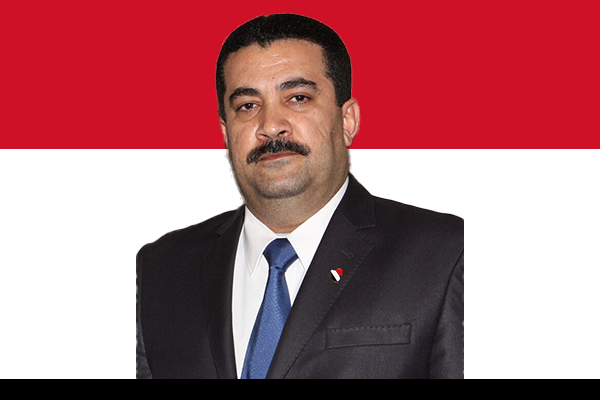
Early Life and Education
Mohammed Shia’ al-Sudani was born in 1969 in the southern province of Maysan, Iraq. He grew up during a turbulent period in Iraq’s history, which shaped his understanding of governance and public service. Al-Sudani pursued higher education in engineering, earning a degree that later complemented his analytical and problem-solving skills in politics. His early exposure to local administrative challenges helped him develop a pragmatic approach to leadership.
Political Career and Rise to Prominence
Al-Sudani began his political career in the post-2003 Iraq era, actively participating in rebuilding Iraq’s institutions. He first held several regional government positions, where he focused on infrastructure development, public services, and security initiatives. Through these roles, he earned a reputation for efficiency, accountability, and a willingness to tackle complex bureaucratic challenges.
His competence in managing provincial affairs caught the attention of national political leaders, leading to his appointment to key ministerial positions. As Minister of Labor and Social Affairs, al-Sudani implemented programs to support vulnerable populations, particularly addressing unemployment and social welfare issues. His initiatives emphasized transparency and inclusivity, which strengthened his credibility among Iraqis across various communities.
Tenure as Prime Minister
Mohammed Shia’ al-Sudani assumed the role of Prime Minister of Iraq in 2022, during a period marked by political instability, economic challenges, and regional tensions. From the beginning, he prioritized economic reform, security enhancement, and national reconciliation. His administration aimed to streamline government operations, reduce corruption, and improve public services, demonstrating a commitment to long-term structural reforms rather than short-term fixes.
Al-Sudani has consistently emphasized dialogue and cooperation with Iraq’s diverse political factions. By promoting consensus-building and national unity, he seeks to strengthen Iraq’s democratic institutions while addressing the grievances of marginalized communities. His approach reflects a balance between pragmatism and vision, ensuring that policy decisions are both realistic and forward-looking.
Economic and Social Policies
Under al-Sudani’s leadership, Iraq has pursued economic diversification, seeking to reduce dependency on oil revenues while boosting investment in agriculture, technology, and infrastructure. He has also focused on job creation, particularly for young Iraqis, through vocational training programs and entrepreneurship initiatives.
Socially, al-Sudani advocates for inclusive governance that respects Iraq’s ethnic and religious diversity. He has championed education reforms, healthcare improvements, and policies aimed at increasing women’s participation in the workforce and public life. His administration works to ensure that government programs reach all Iraqis fairly and efficiently.
Security and Foreign Policy
Prime Minister al-Sudani has prioritized national security, working closely with military and police forces to combat terrorism and organized crime. He seeks to strengthen Iraq’s defense capabilities while maintaining strategic relations with regional and international partners.
In foreign policy, al-Sudani balances Iraq’s relationships with neighboring countries and global powers. He promotes regional cooperation on trade, energy, and security issues, aiming to position Iraq as a stable and reliable partner in the Middle East.
Leadership Style and Legacy
Mohammed Shia’ al-Sudani is known for his pragmatic, inclusive, and reform-oriented leadership style. He emphasizes accountability, dialogue, and results-driven governance. While challenges remain, particularly in tackling corruption and political fragmentation, his tenure has introduced measures that signal Iraq’s potential for sustainable development and political stability.
Al-Sudani’s legacy will likely be defined by his efforts to modernize Iraq’s institutions, promote social cohesion, and create opportunities for economic growth. His vision focuses on a resilient Iraq, capable of navigating internal and external challenges while providing a better quality of life for its citizens.